4 Take the Stairs
Add Intensity to Your Steps
TL;DR
Taking the stairs adds vertical intensity to ordinary movement. Each ascent elevates cardiovascular demand, recruits more muscle, strengthens bone, sharpens balance, and reinforces metabolic and neurologic adaptation. Though brief, these repeated signals compound over time, strengthening multiple systems simultaneously.
Make the stairs your default when they are available, practical, and safe. Weave this simple habit into the routines you already follow. Small vertical choices, repeated daily, build capacity, resilience, and long-term health.
Introduction
In the previous chapter, you increased your daily movement by taking more steps. You established a baseline, learned to build gradually, and discovered the value of consistency. Now we add something different: not more time, but more intensity.
Taking the stairs is one of the simplest and most accessible ways to introduce meaningful physiologic demand into your day. It requires no equipment, no gym membership, no scheduling—just a decision. A staircase becomes a training tool. A routine choice becomes a stimulus.
Stair climbing increases cardiovascular demand, recruits more muscle mass, challenges balance, strengthens bone, and elevates Active Calories, all within minutes. It is walking’s more demanding cousin: short, vertical, and metabolically potent.
This chapter builds on your step foundation. It does not replace walking; it layers intensity into daily life. Small vertical decisions. Meaningful physiologic return.
In This Chapter
Why Stairs Matter: Vertical Intensity in Daily Life
Stair climbing can be understood simply as walking with added resistance, because gravity increases the load with every step. Each upward movement requires greater force production from the quadriceps, glutes, hamstrings, and calves than level walking, which in turn causes heart rate to rise more quickly, oxygen demand to increase, and muscular recruitment to intensify. Even when the effort lasts only a minute or two, the body recognizes stairs as a higher-intensity signal.
Compared with level walking, stair climbing can require roughly twice the energy per minute, with even greater demands at faster climbing speeds. Yet the intention of this chapter is not to turn stair climbing into a structured workout or prolonged training session. The habit here is much simpler: take the stairs when they are available and when it makes practical sense to do so. These moments are brief and often unplanned, and because they are embedded in daily life, they offer immediate and accessible opportunities to introduce a brief but meaningful stimulus. Even short bouts elevate Active Calories and cardiovascular demand in ways that compound over time.
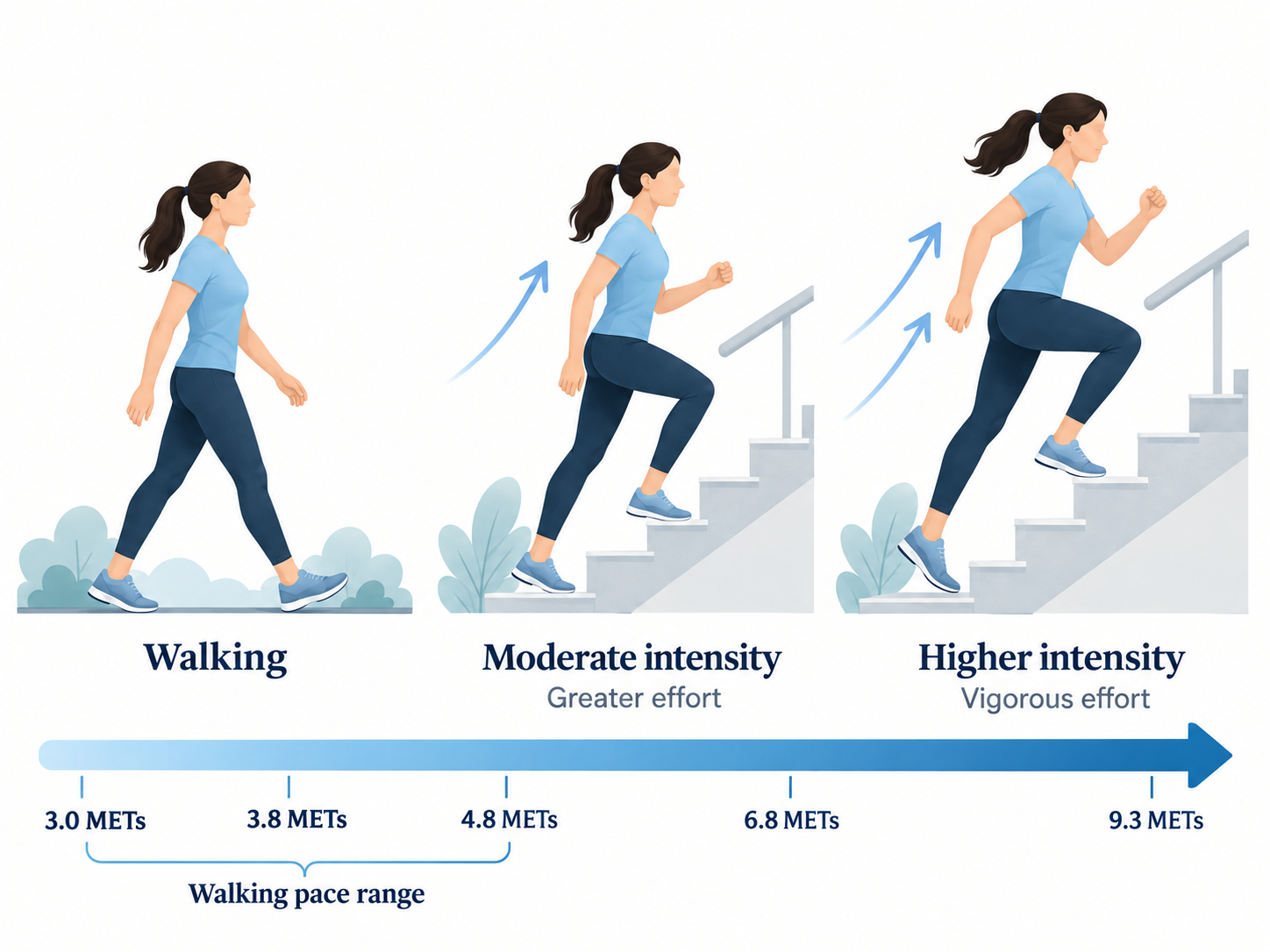
This is what makes stair use such a low-friction option. For those who feel they “don’t have time to exercise,” stairs represent an embedded opportunity already built into the environment. Elevators and escalators are conveniences—consider turning them down. Stairs are functional training devices hiding in plain sight.
Of course, practicality matters. If you're carrying a backpack or light load, the added weight can increase the physical challenge. But if you're on the 56th floor of the Bellagio in Las Vegas, take the elevator. Intensity is valuable, but it must remain repeatable.
Stairway to Health
Stair climbing is not merely movement; it is a concentrated, brief physiologic stimulus. With each ascent, heart rate rises, muscles engage, balance is challenged, and metabolic demand increases. The body does not interpret stairs as convenience or inconvenience; it responds to the increased workload, and with repeated exposure, that workload can produce meaningful adaptation.
What appears to be a small decision, taking the stairs instead of the elevator, becomes an opportunity to challenge multiple body systems simultaneously. Cardiovascular, respiratory, metabolic, musculoskeletal, and neurologic systems respond together, reinforcing one another as physical capacity improves. The benefits are not isolated; they are interconnected, illustrating how a simple daily choice can contribute to greater strength, endurance, resilience, and long-term health.
Cardiovascular System
Few daily decisions raise cardiovascular demand as quickly as climbing stairs. Because each step requires lifting body mass against gravity, heart rate and cardiac output increase almost immediately. Within seconds, effort often reaches moderate-to-vigorous intensity, stimulating the heart and vascular system far more than level walking.
The long-term implications are meaningful. Large prospective cohort data demonstrate that individuals who regularly climb stairs experience lower rates of cardiovascular disease and all-cause mortality. In the UK Biobank cohort of more than 450,000 adults followed for a median of 12.5 years, climbing more than five flights per day was associated with approximately a 20% reduction in cardiovascular disease risk.1,2 Additional analyses presented at the European Society of Cardiology Preventive Cardiology 2024 conference reported a 24% lower risk of premature death from any cause and a 39% reduction in cardiovascular mortality among habitual stair climbers.3
Intervention studies reinforce these findings. In sedentary middle-aged adults, eight weeks of accumulated stair climbing improved predicted VO₂ max, a measure of cardiorespiratory fitness, by approximately 9%.4 In a separate study involving younger women, an eight-week progressive stair-climbing program increased VO₂ max by more than 17% and reduced LDL cholesterol by nearly 8%.5 Other trials incorporating short bursts of high-intensity stair climbing have demonstrated improvements in HDL levels and favorable shifts in cholesterol ratios.6 Although these studies involved structured, progressive stair-climbing programs rather than simply choosing the stairs during everyday activities, they demonstrate how repeated, brief bouts of climbing can produce measurable cardiovascular adaptations.
Not every study shows uniform changes in blood pressure, cholesterol, or body composition. Variability in design, duration, and participant characteristics often produces mixed findings. This is common in exercise science. What remains consistent is directionality: higher cardiorespiratory demand improves cardiorespiratory capacity. Greater vertical load amplifies cardiovascular stimulus, and repeated stimulus reshapes the system. Over time, vessels become more responsive, resting heart rate declines, and cardiac output becomes more efficient, creating a stronger and more resilient cardiovascular foundation.
Respiratory System
Stair climbing substantially increases ventilatory demand, requiring rapid adjustments in respiratory rate and tidal volume as oxygen requirements rise to meet metabolic needs. With repeated exposure, the respiratory system becomes more efficient and more tolerant of breathlessness, reducing perceived exertion during everyday activities. Because respiratory adaptation parallels cardiovascular improvement, the two systems strengthen together. Breathing adapts to demand just as circulation does, and over time the integrated cardiorespiratory system becomes more capable of delivering oxygen efficiently under load.
Metabolic / Endocrine System
Stair climbing is metabolically efficient because it recruits large lower-body muscle groups under load. This rapidly increases glucose uptake, enhances insulin sensitivity, and elevates energy expenditure within minutes.
When stair climbing extends beyond a few brief flights, it may also produce the “afterburn” effect introduced in Chapter 1—excess post-exercise oxygen consumption (EPOC)—modestly extending energy expenditure beyond the climb itself. Regular stair climbing has been associated with improvements in body composition, reductions in blood pressure, and lower risk of metabolic syndrome.7 By repeatedly activating skeletal muscle at moderate-to-vigorous intensity, stair use enhances metabolic flexibility, the ability to efficiently shift between carbohydrate and fat utilization, reinforcing metabolic resilience when embedded consistently into daily life.
Musculoskeletal System
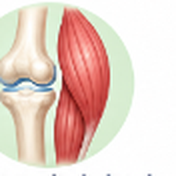
Every flight asks something different of the musculoskeletal system. Your muscles have to generate force to lift you upward. Your bones experience repeated weight-bearing load. Your balance and coordination are challenged as your body shifts vertically from one step to the next.
Muscle is the most obvious part of the equation. Each ascent requires forceful contraction of the quadriceps, gluteals, hamstrings, calves, and hip stabilizers. Compared with level walking, the demand is greater, creating a meaningful resistance stimulus that can improve lower-body strength, muscular endurance, and functional capacity over time. The amount of muscle growth will depend on intensity, frequency, and progression, but the training signal is real.
Bone responds to load as well. Stair climbing is a weight-bearing activity, and each ascent adds another opportunity to challenge the skeleton. Its effects on bone mineral density are less established than those of structured resistance or impact training, but regularly choosing the stairs adds useful mechanical loading to everyday life.
Then there is the part we often overlook: control. Stair climbing requires core stabilization, postural alignment, hip control, proprioception, and dynamic balance. Descending adds eccentric loading of the quadriceps and greater ankle-stabilization demands. These are exactly the capacities that help us move confidently and reduce fall risk as we age.
Neurocognitive / Neurologic System

Although stair climbing has not been studied as an isolated cognitive intervention, its aerobic intensity aligns with broader evidence linking cardiorespiratory fitness to improved brain health. Aerobic exertion increases cerebral blood flow, enhances oxygen delivery to neural tissue, and supports neuroplastic signaling pathways associated with executive function and memory. Higher levels of habitual physical activity are associated with reduced risk of cognitive decline and dementia.8 By improving cardiorespiratory fitness, stair climbing reinforces these neurologic adaptations, strengthening the brain alongside the body.
Mental & Emotional Health

Short bursts of exertion can meaningfully influence mood and perceived energy. Stair climbing rapidly elevates heart rate and stimulates endorphin release, contributing to improved affect and reduced perceived stress. Even a brief climb can shift how you feel, clearing mental fog, lifting energy, and breaking the inertia of a sedentary moment.
Equally important is the psychological effect of deliberate effort. Choosing stairs over elevators is a small but consistent act of agency. It is a visible decision to engage rather than drift, to exert rather than default. That choice often creates a quiet sense of accomplishment, a reminder that you are capable of choosing effort over ease, even in small ways.
Intensity does not need to be prolonged to be meaningful. Repeated daily, this simple act reinforces emotional resilience and strengthens the identity of someone who chooses health intentionally.
Energy, Fatigue, and Sleep

Expending energy builds energy. While that may sound paradoxical, anyone who has exercised regularly recognizes the effect: movement often leaves you feeling more energized, not less. In contrast, prolonged inactivity tends to amplify sluggishness and fatigue.
This shift is not just psychological; it reflects real physiologic adaptation. At the cellular level, stair climbing increases mitochondrial demand and improves cardiovascular efficiency, and with repeated exposure the body becomes more capable of generating and sustaining energy throughout the day. As physiologic capacity rises, ordinary tasks require a smaller percentage of your total reserve and therefore feel less taxing.
Moderate-to-vigorous exertion also supports sleep regulation. Increased physical demand promotes deeper, more consolidated sleep, particularly when activity occurs earlier in the day, reinforcing recovery and preparing the body for the next cycle of effort.
Integrated System Adaptation

One of the most powerful things about stair climbing is that the body does not experience it one system at a time. Your heart does not wait for your muscles to finish adapting. Your lungs do not work independently of your circulation. Balance, metabolism, strength, and recovery all respond together.
With every ascent, cardiovascular demand rises, breathing deepens, large muscles contract against gravity, metabolic pathways accelerate, and the nervous system continuously adjusts balance and coordination. One staircase creates several physiologic signals at once. That is the essence of stacked benefits.
As those signals are repeated, the adaptations begin reinforcing one another. Better cardiovascular fitness makes physical work feel easier. Greater strength improves stability. Better metabolic regulation supports energy and recovery. Improved sleep allows the body to adapt to the next challenge. Capacity grows because the systems are working together, not because any one system changes in isolation.
The climb may last only seconds. The signal reaches the entire body. Repeat that signal often enough, and those small vertical efforts become durable adaptation, one flight at a time.
Up vs. Down: Biomechanics and Safety
Is there a difference between climbing stairs and descending them? Yes, and it matters.
Ascending stairs requires lifting body mass against gravity. The primary drivers are the quadriceps, gluteals, hamstrings, calves, and hip flexors. Each step demands concentric muscle contraction to propel the body upward. Force production is deliberate and controlled. The foot typically lands flat, distributing load evenly and minimizing lateral stress.
Descending stairs is different. Gravity assists the movement, but control becomes the priority. Instead of pushing upward, the body must decelerate downward. This increases eccentric loading of the quadriceps: muscles lengthen under tension to control the descent. The tibialis anterior (shin muscle) engages more actively, and ankle stabilizers work harder to maintain balance.
Descending also increases impact forces and lateral instability. Because the body’s center of mass moves forward and downward, small misalignments can amplify into ankle inversion or twisting injuries. For this reason, ankle sprains occur more commonly during descent than ascent.
The lesson is simple: intensity should never override control.
- Step fully onto each stair.
- Control your descent.
- Use handrails when fatigued or carrying a load.
- Avoid rushing, especially when distracted.
Climbing builds strength and cardiovascular capacity, while descending refines balance and eccentric control. Both are beneficial when performed with awareness. Effort improves health, and control preserves it.
Integrating Stairs into Daily Life
Do not add stairs as a separate workout. Integrate them into what you are already doing.
Stairs are already part of many environments: office buildings, parking garages, stadiums, airports, hotels, and shopping centers. Each is an opportunity to add a brief physical challenge without changing your schedule. The habit reflects a core principle: healthy behaviors should be simple, accessible, and adaptable. Whether you climb one flight or several, the challenge can be adjusted to your capacity and circumstances. The goal is not to create more time for exercise, but to get more out of the movement already built into your day.
For those who want to test the upper limits of vertical effort, events like the Empire State Building Run-Up, with its 86 flights and 1,576 stairs, or the Manitou Incline in Colorado Springs, climbing 2,768 steps at altitude, demonstrate what concentrated ascent can demand. But the true value of this habit is not found in singular challenges; it is found in repetition.
When a small, accessible decision is repeated daily, its effects compound. The staircase you pass each day is not an obstacle. It is an embedded opportunity, built into your environment, aligned with your schedule, and ready whenever you are.
For the next seven days, make the stairs your default when they are available, practical, and safe.
Build on your established walking habit by adding brief moments of vertical intensity throughout your day.
Choose the stairs instead of the elevator or escalator for four flights or fewer, when appropriate.
Aim to accumulate five flights per day, gradually building toward that target if necessary.
Maintain your established daily step baseline from the previous chapter.
Start where you are. One flight is worthwhile, and additional flights can be added as your capacity improves. The goal is not exhaustion or speed, but consistent exposure to a greater physical challenge.
One staircase. One choice. Repeated daily.
Taking the stairs is a simple decision with disproportionate return. Within minutes, it can strengthen muscle and bone, elevate heart rate, improve cardiorespiratory fitness, increase metabolic demand, challenge balance, and reinforce resilience across multiple systems. Its greatest value, however, is not found in a single climb. It is found in repetition.
Walking built your foundation; stairs raise the demand. Health and longevity are not built through occasional bursts of dramatic effort. They are built through repeated exposure to meaningful stimulus—effort that is challenging enough to matter, but repeatable and recoverable enough to become part of daily life.
Every staircase you encounter is an opportunity to reinforce that process. When vertical effort becomes routine, physiology adapts, capacity expands, and confidence grows. And when that choice is repeated day after day, it becomes something more than exercise: it becomes identity.
For educational purposes only. This information is not a substitute for individualized medical advice. Read the Health Disclaimer.
References
- Sanchez-Lastra MA, Ding D, Dalene KE, del Pozo Cruz B, Ekelund U, Tarp J. Stair climbing and mortality: a prospective cohort study from the UK Biobank. J Cachexia Sarcopenia Muscle. 2021;12(2).
- Song Z, Wan L, Wang W, et al. Daily stair climbing, disease susceptibility, and risk of atherosclerotic cardiovascular disease: A prospective cohort study. Atherosclerosis. 2023;386.
- European Society of Cardiology. Climb stairs to live longer. April 26, 2024.
- Kennedy RA, Boreham CAG, Murphy MH, Young IS, Mutrie N. Evaluating the effects of a low volume stairclimbing programme on measures of health-related fitness in sedentary office workers. J Sports Sci Med. 2007;6(4).
- Boreham CAG, Kennedy RA, Murphy MH, Tully M, Wallace WFM, Young I. Training effects of short bouts of stair climbing on cardiorespiratory fitness, blood lipids, and homocysteine in sedentary young women. Br J Sports Med. 2005;39(9).
- Boreham CAG, Wallace WFM, Nevill A. Training effects of accumulated daily stair-climbing exercise in previously sedentary young women. Prev Med. 2000;30(4).
- Whittaker AC, Eves FF, Carroll D, et al. Daily stair climbing is associated with decreased risk for the metabolic syndrome. BMC Public Health. 2021;21(1).
- Northey JM, Cherbuin N, Pumpa KL, Smee DJ, Rattray B. Exercise interventions for cognitive function in adults older than 50: A systematic review with meta-analysis. Br J Sports Med. 2018;52(3).