9 Hanging and Pull-Ups
Strength, Shoulders, and Grip
TL;DR
Pulling is the complementary half of pushing and an essential part of functional strength. Hanging and pull-ups help restore balance in a push-heavy world, strengthening the back, arms, and grip while improving shoulder control, posture, joint health, and coordination.
You do not need to begin with a pull-up. Start with supported or full hangs, build tolerance and control, and progress gradually toward increasingly demanding pulling movements.
A few controlled seconds on a bar may not look like much. Over time, those seconds can become stronger hands, a stronger back, healthier shoulder mechanics, and a physical capability many adults have allowed to disappear. You do not need perfection, only consistent exposure and steady improvement.
All you need is a bar, a place to begin, and the willingness to keep progressing.
Introduction
Strength is not only about pushing the world away from you. It is also about being able to pull yourself toward it.
In the previous chapter, you developed the PUSH pattern through movements such as the push-up, building strength through the chest, shoulders, and arms while reinforcing core stability and control. But pushing is only half of upper-body strength. A strong, capable body must also be able to pull. If push is the yin, pull is the yang.
Hanging and pull-ups are among the clearest expressions of that pattern. The primary work comes from the back, arms, and grip, while the shoulder complex must position, stabilize, and control the body under load. Together, these demands build something larger than isolated muscle strength: they develop the ability to support, control, and eventually move your own body through space.
That distinction is important. Push and pull do not divide the shoulder into separate territories. Pushing develops force primarily through the chest, anterior shoulder, and triceps. Pulling strengthens the back and arms while training the shoulder complex to position, stabilize, and control the body from the opposite direction. Hanging adds something else many adults rarely experience: controlled overhead loading.
And hanging is remarkably simple. You need a sturdy bar and a place to begin. Your starting point may be a supported hang with your feet partially on the ground. From there, you can progress to full hangs, controlled scapular movement, assisted pulling, and eventually full bodyweight pull-ups.
This habit fits naturally with the principles of Habits to Thrive: simple, accessible, and adaptable. Hanging and pulling can also deliver stacked benefits, developing strength, grip, shoulder control, posture, and coordination through one integrated movement pattern.
Just as the push-up represents the broader pattern of pushing, hanging and pull-ups represent the broader pattern of pulling. Rows, pulldowns, and other resistance-based pulling movements train the same fundamental system, developing the back, arms, grip, and the musculature that supports and controls the shoulder. This is not simply about doing pull-ups. It is about reclaiming the ability to hang, hold, control, and pull your own body.
In This Chapter
From Push to Pull
Pushing and pulling are complementary, but they challenge the body in very different ways. A push sends force away from you. A pull brings resistance toward you—or brings your body toward something else. That shift changes the entire demand.
Vertical pulling is especially powerful because modern life gives us surprisingly few chances to use it. Most adults rarely hang, climb, or pull their own bodyweight. Those abilities can fade quietly, which is exactly why they are worth rebuilding.
Hanging and pull-ups bring the whole upper body into the effort. The hands have to hold. The back and arms have to generate force. The shoulder blades have to move and stabilize. The trunk has to keep everything connected as the body moves through space. That is what makes vertical pulling so valuable: it is not just about getting stronger. It is about reclaiming a movement capacity that many of us have stopped asking our bodies to perform.
At first glance, pull-ups may feel less approachable than push-ups. Many people assume they require advanced strength or a gym environment. In reality, they are highly scalable. With a simple bar, whether at home, in a gym, or at a park, most individuals can begin with supported hangs and progress gradually over time.
You may not be able to hang or pull everywhere, but when a bar is available, it creates an easy opportunity to practice the pattern. A few intentional seconds can become a natural movement cue. Over time, those brief exposures accumulate, building grip strength, shoulder control, posture, and pulling capacity without requiring a formal workout.
Pull-ups are not simply an arm exercise. They are a coordinated, whole-body movement that requires strength, control, and timing from the hands to the trunk. And that matters because modern life gives us remarkably few reasons to challenge the body in this way.
Why Pulling and Hanging Matter in a Push-Heavy World
Look at where your arms spend most of the day.
They are usually in front of you: typing, texting, reaching toward a keyboard, holding a steering wheel, carrying objects, working at a counter, pressing, bracing, and spending hours in positions that keep the shoulders subtly forward. These are not forceful pushing movements, but hour after hour they reinforce a forward-held posture. Over time, that pattern can contribute to muscular imbalance, increased loading of anterior structures, and less favorable shoulder mechanics.
Pulling, especially vertical pulling, is different and much less common in daily life. It asks the upper back, arms, and scapular stabilizers to work together to produce and control force from the opposite direction.
Maintaining an appropriate balance between pushing and pulling strength is associated with healthier shoulder function and may help reduce problematic muscular imbalances.1 Vertical pulling helps restore that balance by recruiting the muscles of the upper back, including the latissimus dorsi, trapezius, rhomboids, and posterior shoulder, which stabilize the scapulae and support more efficient alignment. The important point is not that pulling simply “pulls the shoulders backward.” Shoulder mechanics are more sophisticated than that. The scapula must move freely and coordinate with the upper arm. What pulling provides is strength, stability, and control around that moving system.
Hanging and pull-ups are also classic compound movements. The hands have to hold. The elbows have to flex and extend. The shoulder blades have to move and stabilize. The trunk must remain controlled while the body hangs or travels through space. Nothing works alone. That coordinated demand is a major part of what makes vertical pulling so valuable. It reflects not only strength, but coordination, trunk control, and movement efficiency.
You do not have to be an athlete to benefit from that capability. Hanging, gripping, pulling, climbing, lifting, and reaching overhead are all expressions of physical capacity that can matter throughout life.
And every one of those movements begins with the same basic requirement: you have to be able to hold on.
Grip Strength: A Small Test with Big Meaning
Your grip tells a surprisingly large story about the rest of you.
Strong pulling capacity and grip strength are consistently associated with better physical function and long-term health, including lower risks of disability and mortality.1–3 Grip strength, in particular, has emerged as one of the most reliable markers of functional capacity and aging.4,5
And hanging makes grip strength impossible to ignore. Wrap your hands around a bar and lift your feet from the ground. There is nowhere to hide. Your bodyweight immediately asks a simple question:
Can you hold on?
Grip strength is not simply about the hands or forearms. It reflects the coordinated function of multiple systems, including muscle function, neuromuscular control, connective tissue integrity, and broader physiologic reserve. That is why grip strength has become such a useful clinical marker.
Lower grip strength is consistently associated with higher rates of disability, hospitalization, fractures, and all-cause mortality.4,5 In aging populations, weaker grip strength also tracks with poorer physical performance, slower walking speed, and greater risk of functional decline, while stronger grip reflects better overall strength, coordination, and independence over time.5,6
Hanging provides a simple and direct way to both test and train this capacity. A ten-second hang can become fifteen. Fifteen can become thirty. Those small gains are easy to see and easy to measure. Over time, longer and more controlled hangs reflect adaptation not only in the hands and forearms, but throughout the system that supports strength, control, and resilience.
The relationship should be interpreted appropriately. Grip strength is largely a marker, not a magic intervention. The association is strong, but it does not mean that improving grip alone causes better health outcomes. Improving grip alone does not guarantee longer life or prevent disease. Rather, a stronger grip tends to travel with a body that is stronger and more capable overall. In that sense, the hang becomes more than an exercise. It becomes a small window into your physical capacity.
But grip is only the first link in the chain. Once your bodyweight leaves the ground, the shoulder complex must help control everything that happens next.
Your Shoulders Under Load
A pull-up may be driven by the back and arms.
But it succeeds or fails at the shoulder complex.
When you hang from a bar, the shoulder is no longer simply moving an arm through space. It is helping support and control your bodyweight overhead. That requires coordination.
The shoulder is not a single fixed joint. It is a dynamic system in which the upper arm, scapula, rib cage, rotator cuff, and surrounding musculature must move together. The safety and effectiveness of hanging and pull-ups therefore depend heavily on what the shoulder blades are doing as the arms move overhead.
The scapulae are designed to glide and rotate along the rib cage. During arm elevation, they upwardly rotate, tilt posteriorly, and externally rotate. These coordinated movements help maintain appropriate space beneath the acromion, the bony roof at the top of the shoulder, for the rotator-cuff tendons and surrounding tissues.7
When that coordination is impaired, shoulder mechanics can become less favorable. Scapular dyskinesis and altered movement patterns can reduce this protective spacing and may make repeated overhead loading less comfortable or less tolerable, particularly when the movement is repeated under load.
This is why technique matters, particularly as fatigue develops. Biomechanical studies examining pull-up variations have found that very wide-grip and some reverse-grip (supinated) positions can place the shoulder and scapula in less favorable positions and may reduce subacromial space.8 These variations may therefore be less forgiving, particularly for someone with limited mobility, limited strength, or previous shoulder symptoms.
A more moderate grip provides a better starting point for most people. Shoulder-width or slightly wider hand placement, particularly with assistance when necessary, allows the movement to be learned with greater control while the scapula is free to move through a more natural pattern during the pull.
The goal is not simply to get your chin over the bar. It is to build pulling strength on top of good shoulder mechanics, so strength, control, and joint resilience develop together.
Strength, Posture, and Injury Prevention
A strong back changes more than what you can lift. It changes how you hold yourself, how you control your shoulders, and how effectively you can generate and absorb force.
Vertical pulling develops the posterior side of the upper body: the lats, trapezius, rhomboids, posterior deltoids, and the many smaller muscles that help control the shoulder blades. As these muscles become stronger and better coordinated, they create a more stable platform for the shoulders and upper spine. The result is not simply more pulling strength, but better control of the entire upper body.
That balance matters. The goal is not to replace pushing with pulling or to chase some perfect ratio between the two. It is to develop strength in both directions. When one pattern becomes dominant and the other is neglected, the body has fewer options for controlling force. Pairing pushing with pulling gives the upper body a more complete foundation for strength, stability, and movement.3
And pulling is much bigger than the pull-up bar. This principle extends beyond a single exercise. While this chapter centers on hanging and pull-ups, they are only one expression of the broader PULL pattern. Rows, lat pull-downs, cable pulls, resistance bands, climbing, and other variations all train the same fundamental idea: produce force toward the body while keeping the trunk and shoulder complex controlled. Change the angle, resistance, or grip and the challenge changes, but the underlying movement pattern remains.
That capacity shows up outside the gym. It helps when you pull open a heavy door, lift or carry something awkward, climb, brace yourself, control an object moving toward you, or simply maintain better control of your upper body as you move through the day.
This is why progression matters. You do not need to begin with a pull-up or to rush toward one. Hanging builds grip and overhead tolerance. Controlled scapular movement adds shoulder control. Assisted pulls begin to connect the pieces. Eventually, the back and arms become strong enough to move your body through space. The pull-up is not the starting point. It is what the foundation can eventually produce.
And while strength, posture, and shoulder control may be the first benefits you notice, the effects of pulling extend well beyond the musculoskeletal system.
Beyond Strength: Whole Body Health Effects
Hanging and pull-ups are often thought of as exercises for the back and arms, but they ask much more of the body than that. Like the push-up, pulling challenges and supports multiple systems at once. The moment you support and move your own body through space, muscles generate force, joints manage load, the nervous system coordinates the effort, and the rest of the body responds to the demand. That is the real power of pulling. One simple movement can challenge the body on multiple levels at once.
Cardiovascular and Metabolic Systems
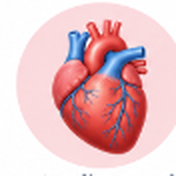
Hanging and pull-ups can raise heart rate and oxygen demand, especially when performed in repeated sets, shorter intervals, or circuit-style formats. They are not a substitute for sustained aerobic training, but they still add to the overall cardiovascular demand.
Metabolically, their value comes primarily from the broader benefits of resistance training, including preservation of lean muscle mass and improved insulin sensitivity.9 As with other strength-based movements, the greatest benefit comes not from one intense effort, but from consistent exposure over time.
Musculoskeletal System
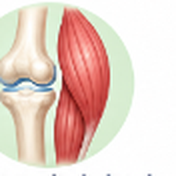
Hanging and pull-ups place sustained, controlled load on the muscles and connective tissues of the hands, forearms, elbows, shoulders, and upper back. With appropriate progressive loading, these tissues adapt to tolerate greater force and repeated stress over time. For many adults, supporting bodyweight overhead is a capacity that has largely disappeared from daily life, making its gradual reintroduction especially valuable.
Hanging helps rebuild that tolerance while strengthening the muscles that support the shoulders, arms, and upper back. The goal is not simply stronger muscles, but a musculoskeletal system better prepared to tolerate load, control the body, and respond when everyday movement becomes more demanding—whether reaching overhead, lifting, climbing, or stabilizing yourself unexpectedly.
Neurocognitive / Neurologic System

Vertical pulling places meaningful demands on coordination, timing, and body awareness. To hang and pull effectively, the nervous system must integrate grip, scapular control, and trunk stability into one coordinated effort, continuously adjusting how the shoulders, spine, and arms work together under load. With repetition, that challenge can improve motor control, proprioception, and movement efficiency, supporting everyday tasks that require balance, stability, and controlled movement, especially when the body is placed in unfamiliar or unpredictable positions.
Mental & Emotional Health

Pulling also creates an unusually clear sense of progress. A five-second hang becomes ten. An assisted pull becomes a slower, more controlled eccentric. Eventually, movements that once felt impossible begin to feel achievable. Those small, measurable wins can strengthen self-efficacy, build confidence in physical capability, and reinforce the motivation to keep going.
Integrated System Effects
Taken together, these adaptations show why hanging and pulling are much more than exercises for the back and arms. The cardiovascular and metabolic systems respond to the workload. Muscles and connective tissues adapt to progressive loading. The nervous system coordinates grip, posture, and movement under load. And repeated progress builds confidence in what the body can do.
As discussed in the previous strength chapters, these effects are part of the broader value of resistance-based movement: different systems adapting together rather than in isolation. Hanging and pull-ups bring many of those adaptations into one simple, repeatable pattern, building strength, control, coordination, and resilience at the same time.
That is the real value of an integrated movement: one habit, multiple systems, stacked benefits.
Hanging First: Building the Foundation
Before you chase pull-ups, earn the hang.
Start with a sturdy bar. If full bodyweight feels like too much, keep your feet lightly on the ground or on a box and use a supported hang. Take a grip around shoulder width or slightly wider, with your palms facing away. From there, simply hold on and let your body settle into the position, allowing the shoulders to elevate naturally at first.
As the position becomes more comfortable, begin adding control. Gently engage the shoulder blades, drawing them down just enough to feel the upper back turn on without bending the elbows. The movement is small, but the effect is important: you are teaching the shoulder complex to manage load while the grip, upper back, and trunk learn to work together.
This progression builds the foundation for everything that follows. Grip strength improves. Scapular control becomes more precise. The shoulders become more accustomed to supporting bodyweight overhead, and key stabilizing muscles of the upper back, including the lower trapezius and serratus anterior, become more engaged. You are not delaying the pull-up. You are building the capacity that makes the pull-up possible.
Start with control. Build tolerance. Let strength follow.
From Hanging to Pull-Ups: Stepwise Progression
Not being able to perform a pull-up is common. Staying there is optional. Progress is a choice.
The habits throughout Habits to Thrive are built around the same idea: start where you are, then give your body a reason to adapt. Pulling strength is no different. The goal is not to prove what you can do today, but to gradually expand what you will be able to do tomorrow. It is about choosing steady progress over comfort and investing in your long-term health and fitness.
Pulling strength responds well to structured training, particularly when controlled eccentric (lowering) phases are included. Rather than jumping straight to full pull-ups, use a stepwise progression that builds grip strength, pulling strength, coordination, and joint tolerance over time.
- HangingSupported → full → controlled
- Eccentric repetitionsControl the lowering phase
- Isometric holdsBuild strength in difficult positions
- Strict bodyweight pull-upsBring the pieces together
- Weighted pull-upsAdvanced progression
Each stage builds on the one before it and prepares you for the next. Hanging builds the grip and shoulder tolerance to support your bodyweight. Eccentrics teach you to control that weight as you lower. Isometric holds strengthen difficult positions. Strict pull-ups bring the pieces together. And once bodyweight pull-ups become controlled and repeatable, additional resistance can provide the next challenge. You are not rushing toward a pull-up. You are building the capacity to earn one. Focus on quality, control, and gradual progression rather than forcing repetitions before your body is ready.
Over time, you may also choose to work toward a single-set performance goal appropriate for your age, sex, body size, training history, and joint health. These are not pass–fail standards. They are simply reference points that can provide direction and help make progress measurable.
The table below offers practical performance targets for generally healthy adults. They should be viewed as training benchmarks rather than population-level norms.
| Sex | Age Range | Beginner (reps) | Intermediate (reps) | Good (reps) | Advanced (reps) |
|---|---|---|---|---|---|
| Men | 18–30 | 1–2 | 3–5 | 6–10 | 11 |
| Men | 31–50 | 1–2 | 3–4 | 5–9 | 10 |
| Men | 51–70 | 0–1 | 2–3 | 4–6 | 7 |
| Women | 18–30 | 1–2 | 3–5 | 6–7 | 8 |
| Women | 31–50 | 1 | 2–4 | 5–7 | 8 |
| Women | 51–70 | 0–1 | 2–3 | 4–6 | 7 |
Note: These categories are adapted from fitness-based reference ranges rather than population-level epidemiologic norms.10 They are intended as practical training and performance targets for generally healthy adults, not pass–fail standards.
Even a modest number of strict pull-ups represents meaningful functional strength. The number matters less than the direction you are moving. Start where you are, build deliberately, and let better control and greater capacity become the measure of progress.
When to Progress
Progress is not about moving to the next variation as quickly as possible. Move forward when your current level feels controlled, repeatable, and pain-free. You should be able to maintain your grip, shoulder position, and overall technique across multiple efforts without your form beginning to break down.
If control disappears as fatigue builds, stay where you are a little longer. That is not stalled progress; it is strengthening the foundation. You do not need to master every variation along the way. Choose the one or two movements that match your current ability, build consistency there, and progress when your body is ready. The goal is not to reach the pull-up quickly. It is to build the strength and control to perform it well.
Your goal this week is simple: begin, practice, and build.
Give your body consistent exposure to hanging and pulling while building familiarity, control, and confidence. For at least three days this week:
- Perform one hanging variation and one pulling movement
- Focus on smooth, controlled, pain-free movement
- Stop before fatigue causes your form to break down
Choose variations that match your current ability. Early on, that may mean supported hangs and assisted pulling. As the movements become more comfortable and repeatable, gradually progress to more demanding variations. Think quality, not exhaustion. A few controlled efforts performed consistently are more valuable than forcing repetitions with poor form.
Track your hang time and the quality of your movement. Look for small improvements in comfort, control, and duration. Progress is measured first in seconds, control, and confidence—not just in repetitions.
Hanging and pull-ups reconnect you with one of the most fundamental human movement patterns: supporting and lifting your own body. They restore balance in a push-heavy world, strengthening the back, arms, and grip while reinforcing shoulder control, posture, coordination, and long-term resilience. But more than that, they change how you relate to your body. A bar becomes more than a piece of equipment. It becomes a simple, honest measure of strength, control, and progress. Every hang asks something of you, and every pull gives something back.
The beauty of this habit is its simplicity. It does not require perfect conditions or complex programming. It asks only for consistency, a willingness to begin, and the discipline to continue. Progress may be gradual, but it is meaningful. Strength builds quietly through repetition, patience, and control. What feels difficult today becomes manageable, then repeatable, and eventually becomes part of what your body can do. Every hang is practice. Every pull is progress.
Push and pull are two halves of the same whole. Together, they create a more balanced, capable upper body and a stronger foundation for the way you move through life. Over time, those small, consistent efforts compound into a stronger, more balanced, and more resilient body, one that supports not only performance, but health, vitality, independence, and long-term physical capacity.
And with the upper body learning to push and pull with strength and control, the next step is to build that same capacity from the ground up—through the legs and hips.
References
- Merrigan JJ, Burke AA, Eddo OO, Kearney J, Marks D, Martin JR. Upper body push to pull ratios in law enforcement officer recruits. Work. 2022;73(4).
- Merrigan JJ, Burke AA, Fyock-Martin MB, Martin JR. What Factors Predict Upper Body Push to Pull Ratios in Professional Firefighters? Int J Exerc Sci. 2020;13(4).
- Negrete RJ, Hanney WJ, Pabian P, Kolber MJ. Upper body push and pull strength ratio in recreationally active adults. Int J Sports Phys Ther. 2013;8(2).
- Soysal P, Hurst C, Demurtas J, et al. Handgrip strength and health outcomes: Umbrella review of systematic reviews with meta-analyses of observational studies. J Sport Health Sci. 2021;10(3).
- Bohannon RW. Grip strength: An indispensable biomarker for older adults. Clin Interv Aging. 2019;14.
- Smith L, Yang L, Hamer M. Handgrip strength, inflammatory markers, and mortality. Scand J Med Sci Sports. 2019;29(8).
- Ludewig PM, Reynolds JF. The association of scapular kinematics and glenohumeral joint pathologies. J Orthop Sports Phys Ther. 2009;39(2).
- Prinold JAI, Bull AMJ. Scapula kinematics of pull-up techniques: Avoiding impingement risk with training changes. J Sci Med Sport. 2016;19(8).
- Churilla JR, Magyari PM, Ford ES, Fitzhugh EC, Johnson TM. Muscular strengthening activity patterns and metabolic health risk among US adults. J Diabetes. 2012;4(1).
- Sayer A. How Many Pull Ups Should I Be Able To Do? Average Pull Ups By Age + Sex. Marathon Handbook. Published online 2024.