
Strong Legs, Strong Hips
Simple Strength for Lifelong Movement
TL;DR
Strong legs and hips change how you move through the world. They support nearly every step, transition, and adjustment your body makes throughout the day. When they are strong and well-coordinated, movement feels smoother, steadier, and more controlled. And the benefits extend beyond movement, supporting cardiovascular, metabolic, musculoskeletal, and neurologic health.
You don't need complexity to build lower-body strength. You need consistency. Simple, adaptable movements such as wall sits, glute bridges, and single-leg exercises can develop strength, stability, and control, with opportunities to progress as your abilities improve. Choose one or two movements that fit your current ability and practice them consistently. The goal isn't to master every exercise, but to build strength that supports how you move and live for years to come.
Strength is expressed through coordinated movement across the body. Every step you take, every time you stand, climb, carry, or recover your balance, your legs and hips are actively engaged. Working alongside your trunk and upper body, they provide the foundation for stability, mobility, and independence throughout daily life.
In the previous two chapters, we focused on building balanced upper-body strength through pushing and pulling movements. Together, those habits develop strength and resilience across the arms, shoulders, back, and trunk. But strength does not stop at the upper body. This chapter completes that progression by focusing on the legs and hips, bringing upper- and lower-body strength together to support mobility, balance, and confidence in movement throughout life.
Building that kind of strength does not require complexity. Like push-ups and pull-ups, lower-body strength can be developed through simple, adaptable movements that fit into daily life and progress with you over time. You don't need special equipment or perfect conditions—just a few effective movements practiced consistently.
Over time, that consistency builds something that matters deeply: the ability to move through life with confidence, resilience, and ease, now and in the years ahead.
In This Chapter
Why Lower-Body Strength Matters
Think about how often you rely on your legs without giving them a second thought. Getting out of a chair, climbing a flight of stairs, carrying groceries, or catching yourself when you stumble—all depend on strength and coordination through your legs, hips, and trunk. These muscles work together to produce force, absorb load, and maintain stability, providing the foundation for much of how we move through daily life.
When this system is well developed, movement feels efficient, stable, and controlled. When it is not, everyday tasks become more effortful, less steady, and more fatiguing. These changes are often subtle at first, but over time they influence how freely and confidently a person can move.
Despite its importance, lower-body strength often declines not because of injury or disease, but because modern life no longer demands it in sufficient doses. Sitting replaces standing, and elevators replace stairs, reducing the small, repeated efforts that once helped maintain strength throughout the day. Combined with age-related changes in muscle mass, strength, and neuromuscular function, these shifts can gradually reduce both strength and power.
The challenge is that we often don't notice what we're losing until something that once felt effortless begins to feel difficult. Eventually, the consequences become more apparent. Reduced leg strength is strongly associated with slower walking speed, difficulty rising from a chair, impaired balance, and an increased risk of falls and disability.
But here's the encouraging part: declining strength is not an inevitable one-way journey. Our muscles and nervous system retain a remarkable ability to adapt, even later in life. Much like the gains seen with pushing and pulling, improvements in lower-body strength can begin within weeks of consistent practice. Even simple movements, performed regularly, can build strength, improve stability and control, and make daily movement feel more reliable.
You do not need external weights or specialized equipment to get started. A few well-chosen movements, practiced with attention and consistency, can build meaningful strength over time. As your strength improves, adding resistance through free weights, resistance bands, or exercise machines can support continued development, particularly for those who already have a strong foundation. But for now, let's keep things simple, accessible, and adaptable. The movements we'll explore in this chapter can provide plenty of challenge on their own, with opportunities to progress as you become stronger.
Ultimately, intentional lower-body training is about more than building muscle or improving performance. It is about maintaining the strength to do the things you enjoy, the stability to move with confidence, and the physical capacity to remain active and independent throughout life.
The Legs and Hips:A Foundational Movement System
The legs and hips function as a coordinated system that generates force, absorbs impact, and maintains stability as we move. This system includes the major muscles of the thighs and hips, including the quadriceps, hamstrings, gluteals, calves, and deep hip stabilizers, all working together with the trunk to support posture and efficient movement. Rather than acting in isolation, these muscles operate as a connected unit that allows you to stand, walk, climb, lift, and respond to changes in position with control.
The hips play an especially important role in generating power, stabilizing the pelvis, and controlling how the legs move. Think about climbing stairs or rising from a chair. Your hips, thighs, and trunk must work together to lift and stabilize your body. When the muscles around the hips are weak or poorly coordinated, other muscles and joints may have to compensate. The knees may experience altered loading, while the lower back may take on additional demands to stabilize the body. Over time, these changes in movement mechanics can contribute to unnecessary strain, discomfort, and potentially pain.
Durable lower-body strength is built by training the legs and hips to generate, sustain, and control force. In real life, these demands rarely occur in isolation. Most movements are compound, requiring multiple muscle groups to work together across joints while maintaining balance and alignment. That's why our goal isn't simply to strengthen one muscle at a time. It's to develop the coordinated strength that makes everyday movement more capable, efficient, and controlled.
And building that strength doesn't have to be complicated. What matters is practicing effective movements with good control, consistency, and gradual progression over time.
Knees, Hips, and Load:Building Strength Without Unnecessary Strain
If you've ever hesitated to do squats or other leg exercises because you were worried about your knees or hips, you're not alone. But loading a joint is not inherently harmful. Appropriately applied resistance strengthens the muscles and supporting tissues that help joints function effectively. Problems are more likely when the demands of an exercise exceed what your body is prepared to tolerate. That is why proper technique and control should always come before increasing depth, resistance, intensity, or volume.
Research consistently shows that strengthening the muscles surrounding the knee and hip improves joint stability and reduces pain, even in individuals with osteoarthritis. Stronger, better-coordinated muscles help the body manage and distribute forces during everyday movement. Good form is more than a technical detail; it helps you build strength and resilience while minimizing unnecessary strain and reducing the risk of injury.
Fortunately, nearly every exercise can be adapted to your ability and comfort. Depth, range of motion, load, and volume are all adjustable. Pain is not a badge of honor here; it is important feedback. Learning to distinguish normal training discomfort from warning signals matters. Muscle fatigue and next-day soreness can be part of a healthy adaptive response. Sharp, pinching, catching, or escalating joint pain is different and should prompt you to pause, reduce the range or intensity, and examine your form before continuing.
The goal isn't to avoid loading your joints. It's to build the strength and control that help them handle life's demands. Start comfortably, progress gradually, and let the quality of your movement guide you.
Strength, Balance, and Injury Prevention
Lower-body strength is closely connected to balance. The ability to stabilize the body over one or two legs depends on coordinated strength, proprioception, and trunk control. These elements build on one another. Strength gives you the capacity to move; balance and coordination help you control that movement, whether you're walking across uneven ground, stepping off a curb, or catching yourself after a stumble.
This foundation will be explored further in the chapters ahead, where we focus on core stability, unilateral movement, and balance as a dynamic interaction between the body and the brain. For now, consider how much you depend on balance without even thinking about it. When your muscles and nervous system work together effectively, most of these adjustments happen automatically. But when strength or coordination declines, ordinary movements can become less steady and more demanding.
Weakness in the hips and thighs is strongly associated with a higher risk of falls, particularly in older adults. Falls are the leading cause of injury-related death in adults over the age of 65, underscoring the real-world consequences of declining lower-body strength and balance. Often, the warning signs appear long before a fall occurs: hesitation on stairs, difficulty navigating uneven ground, or trouble recovering from a small misstep. These early signals matter. They can be opportunities to recognize declining strength or balance and take action before a more serious problem develops.
The encouraging news is that strength and balance are trainable. Strength training that challenges the legs and hips improves not only force production, but also the ability to coordinate and control movement under everyday conditions. While strength provides an essential foundation, balance and coordination also benefit from exercises that specifically challenge those abilities. Together, these adaptations support steadier movement, protect joints, and help lower the risk of falls and injuries. Over time, they can make everyday activities feel more secure and help you remain active and independent.
Strength provides capacity. Balance provides control. Together, they help you move through life with greater confidence and resilience.
Simple Movements That Build Durable Strength
Strength and balance provide the foundation. Now comes the practical question: How do you build them without adding complexity to your life?
As with the push-up and pull-up habits, this chapter follows the same philosophy practiced throughout this book: effective habits should be simple, accessible, and adaptable. Rather than prescribing one exercise for everyone, I want to introduce several effective movement options and help you choose what works best for you. You can select one or more movements based on your current ability, comfort, goals, and personal needs.
All of the movements introduced below require little or no equipment, minimal space, and modest time. They can be performed at home, while traveling, or woven into short movement breaks throughout the day, much like the activity and exercise snacks introduced earlier. Each movement can also be modified to match your current strength and mobility, with opportunities to increase the challenge as you improve.
You don't need to master every movement or follow a complicated routine. Choose one or two that feel manageable, practice them consistently, and build from there. Over time, those small, repeatable efforts develop strength that carries into how you move, stabilize, and live.
Foundational Lower Body Movement Options
The movements below reflect a small number of essential patterns the body relies on every day: sitting and standing, hinging at the hips, stabilizing on one leg, and controlling the body through space. These aren't just exercise patterns. They're movements you already use throughout your day, and strengthening them can make everyday activities easier and more reliable.
Wall sits, glute bridges, single-leg RDLs, and pistol squats were selected because together they challenge different aspects of lower-body function. They train knee-dominant and hip-dominant strength, bilateral and unilateral loading, and both isometric and dynamic control, while also challenging balance, trunk stability, and joint control. Some are approachable for beginners; others offer more advanced challenges or can be modified to match your current ability.
These four movements are not the only effective options. Squats, lunges, step-ups, and many other exercises can develop similar capabilities. I've selected these examples to illustrate different ways of building lower-body strength without requiring a gym or specialized equipment.
As we explore each movement, pay attention to what it challenges and how it can be adapted. You may find that one fits your needs particularly well.
Visual demonstrations of these movements and their common variations are widely available online. If you're unfamiliar with an exercise or unsure about proper technique, watching a reliable instructional video can help you understand the movement, recognize common mistakes, and choose a variation appropriate for your ability.
You do not need to master all of these. You need to start with one..
Wall Sits / Wall Squats
A wall sit is an isometric squat performed with your back supported against a wall and your knees bent to a comfortable depth. The body remains still while the muscles of the legs and trunk hold the position. It looks simple, but don't let the lack of movement fool you. Your muscles are working continuously to hold your body in place. With no visible movement, the emphasis shifts away from momentum and toward sustained muscular effort and control.
In this position, the quadriceps do most of the work, supported by the gluteals and trunk stabilizers. The trunk also helps maintain posture and alignment, reinforcing the importance of core stability during lower-body exercise—a concept we'll explore further in the Core chapter.
What makes this movement especially valuable is its simplicity. There is no need to coordinate complex movement or manage external load. You settle into position, and the work begins. The muscles are asked to sustain force over time, building strength in a way that support daily activities, whether standing up from a chair, descending stairs, or maintaining posture during prolonged standing.
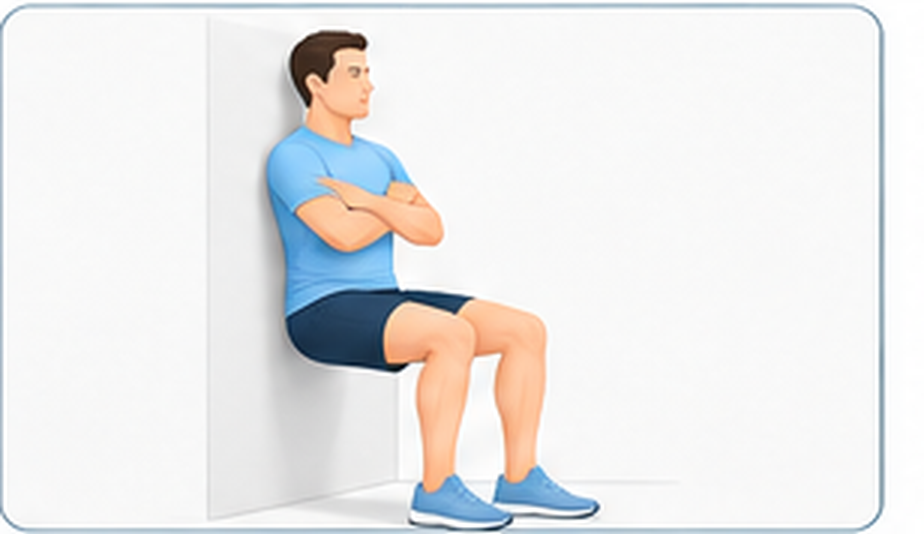
Wall sits are highly controlled. The knees are loaded without repeated joint motion, making them a potentially useful option for those returning from inactivity or managing knee sensitivity. Depth and duration are easy to adjust, while the wall provides support and feedback on positioning.
Wall sits are also highly controlled. The knees are loaded without repeated joint motion, making them a potentially useful option for those returning from inactivity or managing knee sensitivity. Depth and duration are easy to adjust, allowing you to increase or decrease the challenge, while the wall provides support and feedback on your positioning.
Here's another example of stacked benefits: wall sits can do more than strengthen your legs. Structured isometric exercise training has demonstrated meaningful cardiovascular benefits, particularly reductions in resting blood pressure. In pooled analyses, isometric training programs have produced average reductions of approximately 8–10 mm Hg in systolic blood pressure and 4–5 mm Hg in diastolic blood pressure. Wall squats have emerged as a particularly effective form of isometric training for blood pressure reduction, illustrating how a simple strength exercise may benefit multiple systems.
Progression
As your strength improves, you can increase the challenge in several ways:
- Sit slightly lower
- Hold the position longer
- Perform short, repeated holds with rest between efforts
- Adjust arm position to vary posture and trunk demands while maintaining control.
Throughout these progressions, maintain comfortable knee alignment, steady breathing, and controlled effort. Avoid holding your breath or straining excessively, particularly during longer or more demanding holds. For those ready for additional resistance, external weight can be introduced cautiously, provided posture, breathing, and comfort remain consistent. The goal isn't to see how much discomfort you can tolerate. It's to develop strength through consistent, controlled effort.
Glute Bridges
A glute bridge is performed lying on your back with your knees bent and your feet on the floor, lifting the hips by pressing through the feet while keeping the trunk steady. Raise your hips until your shoulders, hips, and knees form a roughly straight line, without excessively arching your lower back. The movement is deliberate and controlled, with the hips generating the motion rather than the lower back. It's a simple movement, but an effective way to strengthen the muscles that help propel, support, and stabilize your body throughout the day.
This exercise emphasizes the gluteal muscles and hamstrings, which drive hip extension and help coordinate movement between the pelvis and thighs. When these muscles are strong and well-coordinated, they help generate force efficiently and support controlled movement during activities such as standing, climbing stairs, and lifting.
With so much of modern life spent sitting, the muscles responsible for hip extension may not be challenged as often or as intensely as they need to maintain strength. Glute bridges offer a simple way to strengthen these muscles in a supported position, without requiring standing balance or external weights.
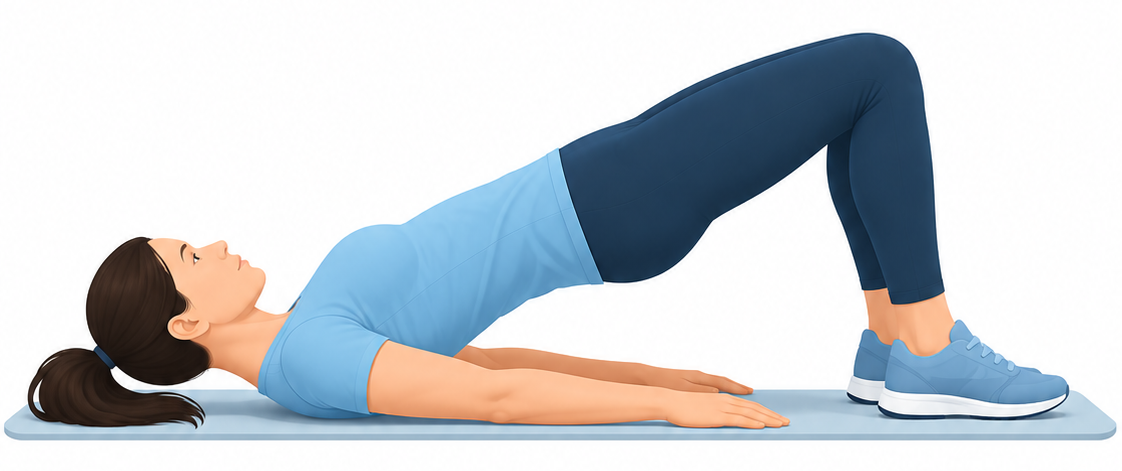
Because the trunk must remain steady as the hips lift, bridges also reinforce stability through the midsection, complementing the principles we'll develop further in the Core chapter.
The goal is not to lift higher, but to move with control, allowing the hips to do the work while the spine remains stable.
Glute bridges can be performed either dynamically, moving smoothly through repetitions, or as an isometric hold at the top position. Dynamic repetitions emphasize coordinated movement through a comfortable range of motion, while holding the top position highlights sustained tension and postural control. Both approaches challenge the muscles in complementary ways.
Progression
Once you're comfortable with the basic movement, consider these variations:
- Slow the tempo of each repetition
- Add a brief pause at the top position
- Hold the top position for longer durations
- Transition to single-leg bridges to increase the demand on strength, balance, and control
- Elevate the planted foot to increase range of motion
- Introduce an unstable surface (such as a Swiss ball) to increase coordination and core demands
More advanced variations should be introduced only after basic control and comfort are well established. Progress should feel steady, not strained.
Single-Leg Romanian Deadlifts (RDLs)
A single-leg Romanian deadlift is a hip hinge performed while standing on one leg, with the opposite leg extending behind you as your torso inclines forward. Begin with a slight bend in your supporting knee. As you hinge at the hips, allow your other leg to extend behind you while your torso moves toward the floor. Keep your spine long and steady, allowing the movement to originate from your hips rather than your lower back. If balance is challenging, lightly hold a chair or countertop for support.
This movement places a strong demand on the posterior chain, particularly the gluteals and hamstrings, while also challenging balance and coordination. As you hinge forward on one leg, your muscles and nervous system must continuously make small adjustments to keep your pelvis and trunk stable. This challenges proprioception—your body's awareness of its position and movement—and reinforces the coordination needed to generate and control force during everyday activities.
One of the most valuable aspects of this exercise is its ability to reveal and challenge side-to-side differences in strength and control. You may discover that balancing or hinging feels noticeably easier on one side than the other. These asymmetries are common and often go unnoticed during two-leg exercises, where the stronger side can compensate for the weaker—a concept we will explore further in the chapter on unilateral movements. Training each side independently provides an opportunity to develop strength and control where they may be lacking.
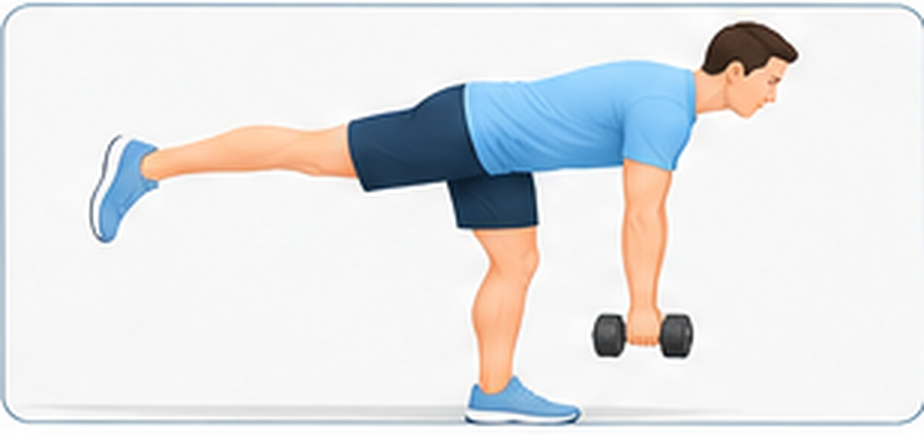
This movement can be performed with body weight alone or with light resistance, and the depth of the hinge can be adjusted based on comfort and mobility. The goal is not how far you reach, but how well you control the movement.
Progression
Once you’re comfortable with the basic movement, you can increase the challenge in several ways:
- Hinge slightly deeper
- Slow the tempo
- Add brief pauses to increase time under tension
- Introduce light external load once balance and alignment are consistent
As with all progressions, quality matters more than load. If balance falters or alignment deteriorates, reduce the challenge and rebuild control.
Pistol Squats (Optional / Advanced Movement)
A pistol squat is a single-leg squat performed while the nonworking leg extends forward, and the hips and knee move through a deeper range of motion. The body lowers and rises on one leg while maintaining balance, alignment, and control throughout the movement. If you've ever watched someone perform a full pistol squat, you know it requires more than just strong legs. It is a demanding combination of strength, mobility, coordination, and balance.
This movement places high demands on the quadriceps and gluteals while requiring substantial mobility at the hips, knees, and ankles. Supporting your body weight on one leg through a deep squat challenges not only your ability to generate force, but also to control that force throughout the movement. Few bodyweight exercises bring together so many aspects of lower-body function in a single movement.
But here's an important point: you don't need to perform a full pistol squat to develop strong, capable legs. Many people can build excellent lower-body strength and function without ever mastering this movement. Its value in this chapter is as an example of how far single-leg strength and control can progress, not as a standard everyone needs to achieve.
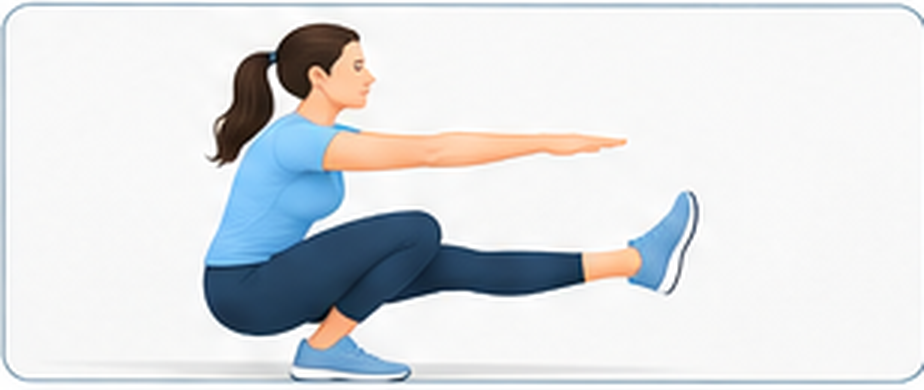
A full pistol squat combines strength, mobility, balance, and control. Modified versions can still be useful while building toward the full movement, but the figure here shows the complete unassisted position.
Progression
Whether you're beginning with an assisted version or already performing deeper squats, you can progress by adjusting one variable at a time:
- Begin with assisted versions (holding onto a support or lowering to a chair)
- Reduce assistance over time
- Lower the box or target height gradually
- Slow the tempo or add brief pauses to build control
- Progress toward unassisted movement only when alignment and comfort are consistent
The goal isn't necessarily to achieve a full pistol squat. It's to use the movement—or an appropriate variation—to develop strength, mobility, balance, and control at a level that challenges you safely and effectively.
Putting It All Together:Choosing What Works for You
Each of these four movements offers a different way to build lower-body strength, stability, and control. Although they look and feel different, they challenge many of the same foundational abilities: generating force, controlling movement, and coordinating muscles across the hips, legs, and trunk. None is inherently better than the others. Each simply emphasizes a slightly different aspect of lower-body function.
And remember, you don't need to perform all four. Choose one or two movements that fit your current ability, comfort, and goals, and practice them consistently. The best starting point is the one that challenges you appropriately and that you can sustain. Over time, you can expand, adapt, or progress as your strength and confidence grow.
These aren't your only options. Squats, lunges, and step-ups are familiar examples that train similar movement patterns and can be used as alternatives or complements. For those who prefer a gym setting or want additional challenges, external resistance offers even more opportunities for progression. Dumbbells, kettlebells, barbells, and exercise machines—including leg presses and other loaded variations—allow you to increase resistance while maintaining an emphasis on controlled, coordinated movement. The environment may change, but the foundational movement patterns remain the same.
Not sure where to begin? The table below offers a simple guide to choosing movements based on your current ability, comfort, and goals.
These same movement patterns can also be progressed with external resistance, using dumbbells, kettlebells, machines, or barbells, depending on your preference and access.
Lower-body strength does not come from mastering a single exercise. It comes from practicing a few simple movement patterns with regular practice, attention, and respect for your current capacity, then gradually applying progressive overload and introducing variation to further stimulate growth and adaptation. Choose the movements that fit you best, perform them well, and allow progress to unfold over time.
As strength builds, everyday movement begins to change. Standing feels easier, stairs feel steadier, and balance becomes more confident. These shifts may seem small, but they are not minor. They are early signs of meaningful change.
Progress does not require complexity. It requires showing up consistently. Over time, that repeated effort builds strength that carries into how you move, stabilize, and live. As that strength develops, it becomes a signal that extends across systems, reinforcing health in ways that build and compound.
Beyond Strength:Whole-Body Health Effects
The benefits of lower-body strength extend far beyond the muscles themselves. Your legs and hips contain some of the largest and most powerful muscle groups in your body, and training them does much more than improve how you move. It stimulates adaptations that influence cardiovascular health, metabolism, bone strength, neuromuscular function, and even mental well-being.
As we've explored in earlier chapters, the benefits of exercise rarely occur in isolation. Lower-body strength training is another powerful example of how a simple habit can support multiple aspects of health, with benefits that build on and reinforce one another over time.
Cardiovascular System
You might not immediately associate stronger legs with a healthier cardiovascular system, but the connection is meaningful. And by now, you probably won't be surprised to discover another example of stacked benefits. Lower-body strength training influences cardiovascular health in ways that extend beyond traditional aerobic exercise. Isometric and resistance-based movements, particularly those involving large muscle groups such as the legs and hips, create meaningful demands on the vascular system. Over time, these repeated challenges can promote adaptations that improve blood pressure regulation and vascular function.
Resistance and isometric training may improve endothelial function (the ability of the inner lining of blood vessels to help regulate blood flow) and influence arterial stiffness, both of which play important roles in cardiovascular health. These adaptations may involve greater nitric oxide availability, improved vascular responsiveness, and changes in vascular resistance.
As we discussed with wall sits, some of these benefits can be surprisingly substantial. Structured isometric exercise training has been shown to reduce resting blood pressure, with studies reporting systolic reductions averaging approximately 8–10 mm Hg. That's a meaningful cardiovascular benefit from a form of exercise many people associate primarily with muscular strength.
Importantly, muscular strength itself is associated with long-term cardiovascular outcomes. Observational studies have found that people with greater muscular strength tend to have lower rates of cardiovascular and all-cause mortality. Although these associations do not establish cause and effect, they reinforce the potential importance of maintaining strength as part of a broader strategy for lifelong cardiovascular health.
Metabolic / Endocrine System
The muscles of the legs and hips represent a large proportion of total skeletal muscle mass, making them important contributors to metabolic health. Skeletal muscle is one of the body's primary sites for glucose uptake and storage, particularly after meals. Strengthening these muscles through resistance training can improve glucose uptake, insulin sensitivity, and overall metabolic efficiency over time.
Movements such as wall sits, glute bridges, and single-leg exercises help challenge and preserve this metabolically active tissue. As strength and muscle mass are maintained or improved, they support glucose regulation and the body's ability to manage energy demands. The benefit is not simply stronger legs, but a stronger foundation for metabolic health.
Musculoskeletal System
Lower-body strength training provides essential mechanical loading to bones, joints, and connective tissues. Just as muscles respond to the demands placed upon them, bones, tendons, and other supporting structures can adapt to appropriately applied mechanical stress. Weight-bearing and resistance exercises help maintain bone strength while gradually building the capacity of supporting tissues to handle physical demands.
Weight-bearing strength work is a key component of preserving bone mass and supporting fracture prevention with aging. Even modest changes in bone density can be meaningful. In controlled trials and meta-analyses, appropriately designed resistance and impact-training programs have been shown to increase bone density at key sites such as the hip by approximately 1–3%, potentially offsetting some age-related bone loss. The magnitude of these improvements depends on the type, intensity, and duration of training. In bone health, maintaining density is often just as important as increasing it.
Simple movements, practiced consistently, help maintain the structural resilience needed for daily life. Over time, appropriately applied loading allows muscles and supporting tissues to adapt and become more tolerant of physical demands. Stronger hips and thighs also improve the body's ability to stabilize under load, particularly during transitions such as standing, stepping, or changing direction. This added strength supports joint alignment, helps manage forces more effectively, and reduces unnecessary strain during everyday movement.
Neurocognitive / Neurologic System

Strength doesn't come from muscles alone. Your nervous system plays a critical role in determining how effectively those muscles are activated, coordinated, and controlled. Lower-body movements require continuous communication between the brain, muscles, and sensory systems, particularly when balancing on one leg, navigating uneven ground, or responding to an unexpected change in position—a process often referred to as sensory integration.
With consistent training, the nervous system can become more effective at recruiting and coordinating muscles, contributing to improvements in strength, stability, and movement efficiency. Exercises that challenge balance and control also engage proprioception and sensory integration, helping the body make the continuous adjustments needed for coordinated movement.
These neuromuscular adaptations complement the muscular strength developed through training. Together, they support more reliable movement, better responses to unexpected challenges, and greater confidence in everyday activities.
Mental & Emotional Health

The benefits of stronger legs aren't just physical. Feeling stronger, steadier, and more capable can also influence how confidently you approach everyday life. Resistance training is associated with improvements in self-efficacy, the belief in your ability to accomplish a task, confidence, and perceived physical capability, along with reductions in depressive symptoms.
These effects are reinforced by tangible functional gains. As strength improves, activities that once felt difficult may become easier, and people often feel more capable and secure in their bodies. That growing confidence can reduce hesitation and encourage continued activity, creating a positive cycle: greater strength supports greater confidence, which encourages more movement and further improvement.
Energy, Fatigue, and Daily Function
Stronger legs can make everyday movement feel easier and less demanding. Standing feels easier. Stairs feel steadier. Walking feels more stable and controlled. As strength improves, these familiar activities require a smaller proportion of your available muscular capacity, allowing you to perform them with less relative effort.
That difference can become meaningful over the course of a day. Tasks that once felt tiring may become more manageable, helping reduce the sense of physical fatigue and allowing you to do more before reaching your limits. Over time, these improvements support greater functional endurance and help preserve the ability to remain active, independent, and engaged in daily life.
Integrated Systems:Strength That Extends Beyond Movement
The body does not adapt in isolation. As we've explored, strengthening the legs and hips influences far more than muscular performance. Cardiovascular, metabolic, musculoskeletal, neurologic, and psychological adaptations work together, supporting health in ways that extend well beyond movement alone.
And here's where the benefits begin to compound. Improved strength supports better movement. Better movement can encourage greater activity. Greater activity creates additional opportunities for physical adaptation and improved health. What begins as a simple strength habit can become part of a positive cycle that reinforces itself over time.
These benefits are interconnected, not isolated. Balance, stability, and fall prevention depend on multiple systems working together, not simply on how strong your legs become. By strengthening the lower body, you develop one important part of the foundation that supports coordinated, capable movement throughout life.
What begins as a simple strength habit becomes a foundation for resilience, independence, and long-term health. Strength in the legs is not just about movement. It is about maintaining the capacity to live fully, move confidently, and remain independent across the lifespan.
Your Goal This Week:
Practice one or two simple lower-body movements that build strength, stability, and control.
Frequency:
Aim to incorporate these movements on at least five days this week, adjusting intensity and duration to allow adequate recovery. Not every session needs to be challenging; some can simply focus on technique and control.
How to Choose:
Select one or two movements that fit your current ability, comfort, and goals. Use the guide below to help you decide where to begin. Remember, the goal isn't to master every exercise, but to build a habit you can repeat consistently, adapt, and progress over time.
| Focus | A good place to begin |
|---|---|
| Knee strength with minimal joint motion | Wall sits |
| Hip and posterior chain strength | Glute bridges |
| Posterior chain strength with balance and coordination | Single leg RDLs |
| A higher challenge that integrates strength and control | Assisted or partial pistol squats |
Examples of how to match lower-body movements to your current focus, ability, and comfort.
You do not need to do more to start. Focus on consistency, move with control, and let progress build gradually over time.
Lower-body strength is not just about stronger leg muscles. It is about building and preserving the ability to move through life with confidence, stability, and control. Strong legs and hips help support the activities you enjoy, the challenges you take on, and the independence you want to maintain throughout life.
By choosing simple movements and practicing them consistently, you train more than strength alone. You reinforce coordination, posture, and resilience in ways that extend well beyond exercise. As your strength develops, activities that once felt difficult may become easier, and movements you once approached with hesitation may begin to feel more natural. These improvements may seem small at first, but together they can make a meaningful difference in what you feel capable of doing.
As with the other physical activity habits we've explored, success is not defined by how advanced a movement looks or how hard it feels. It is defined by consistency, quality, and patience. Start where you are, choose movements that fit your body and your life, and allow progress to unfold. The strength you build here does more than improve how you move. It is part of a larger foundation for lifelong movement and health. In the chapters ahead, we'll explore how core stability, unilateral strength, and balance help you put that strength to work with greater coordination and control.
References
- Riviati N, Indra B. Relationship between muscle mass and muscle strength with physical performance in older adults: A systematic review. SAGE Open Med. 2023;11.
- Powers CM. The influence of abnormal hip mechanics on knee injury: A biomechanical perspective. Journal of Orthopaedic and Sports Physical Therapy. 2010;40(2).
- Lanza MB, Arbuco B, Ryan AS, Shipper AG, Gray VL, Addison O. Systematic Review of the Importance of Hip Muscle Strength, Activation, and Structure in Balance and Mobility Tasks. Arch Phys Med Rehabil. 2022;103(8).
- Mo L, Jiang B, Mei T, Zhou D. Exercise Therapy for Knee Osteoarthritis: A Systematic Review and Network Meta-analysis. Orthop J Sports Med. 2023;11(5).
- Kakara R, Bergen G, Burns E, Stevens M. Nonfatal and Fatal Falls Among Adults Aged ≥65 Years — United States, 2020–2021. MMWR Morb Mortal Wkly Rep. 2023;72(35).
- Pijnappels M, van der Burg JCE, Reeves ND, van Dieën JH. Identification of elderly fallers by muscle strength measures. Eur J Appl Physiol. 2008;102(5).
- Cornelissen VA, Smart NA. Exercise training for blood pressure: a systematic review and meta-analysis. J Am Heart Assoc. 2013;2(1).
- Edwards JJ, Deenmamode AHP, Griffiths M, et al. Exercise training and resting blood pressure: a large-scale pairwise and network meta-analysis of randomised controlled trials. Br J Sports Med. 2023;57(20).
- Green DJ, Spence A, Halliwill JR, Cable NT, Thijssen DHJ. Exercise and vascular adaptation in asymptomatic humans. Exp Physiol. 2011;96(2).
- Ashor AW, Lara J, Siervo M, Celis-Morales C, Mathers JC. Effects of exercise modalities on arterial stiffness and wave reflection: A systematic review and meta-analysis of randomized controlled trials. PLoS One. 2014;9(10).
- Ruiz JR, Sui X, Lobelo F, et al. Association between muscular strength and mortality in men: Prospective cohort study. BMJ. 2008;337(7661).
- Boyer W, Toth L, Brenton M, Augé R, Churilla J, Fitzhugh E. The role of resistance training in influencing insulin resistance among adults living with obesity/overweight without diabetes: A systematic review and meta-analysis. Obes Res Clin Pract. 2023;17(4).
- Ng CA, Gandham A, Mesinovic J, Owen PJ, Ebeling PR, Scott D. Effects of Moderate-to High-Impact Exercise Training on Bone Structure Across the Lifespan: A Systematic Review and Meta-Analysis of Randomized Controlled Trials. Journal of Bone and Mineral Research. 2023;38(11).
- Villareal DT, Steger-May K, Schechtman KB, et al. Effects of exercise training on bone mineral density in frail older women and men: A randomised controlled trial. Age Ageing. 2004;33(3).
- Gordon BR, McDowell CP, Hallgren M, Meyer JD, Lyons M, Herring MP. Association of efficacy of resistance exercise training with depressive symptoms meta-analysis and meta-regression: Analysis of randomized clinical trials. JAMA Psychiatry. 2018;75(6).