
Sleep
Rest → Recover → Thrive
TL;DR
Sleep is not simply a period of rest. It is an essential, biologically active process that supports nearly every system in the body. While we sleep, our brains consolidate memories, hormones and metabolism are regulated, tissues are repaired, and important processes support immune function, physical recovery, and adaptation. Consistently obtaining sufficient, restorative sleep supports cardiovascular and metabolic health, cognitive performance, emotional resilience, and long-term well-being. Sleep is one of our most powerful whole-body health habits, with benefits that extend far beyond feeling refreshed the next morning.
For most adults, approximately seven to nine hours of sleep each night is a sensible goal, but duration is only part of the equation. Sleep quality, timing, and regularity also matter. A consistent sleep schedule, morning daylight exposure, regular physical activity, a comfortable sleeping environment, and thoughtful choices about caffeine, alcohol, and evening routines can all support healthier sleep. Persistent sleep difficulties may reflect underlying conditions, such as insomnia or obstructive sleep apnea, that deserve evaluation rather than simply another adjustment to bedtime habits.
The goal isn't perfect sleep every night. It's to develop consistent, sustainable habits that give your body and brain the opportunity to obtain the restorative sleep they need to support recovery, adaptation, and ultimately, better health and wellness.
Think about this for a moment. You will spend approximately one-third of your life asleep. If you live to be 90, that amounts to roughly 30 years. Thirty years! That's an extraordinary amount of time devoted to an activity during which you are largely unaware of the world around you, unable to eat, work, exercise, or accomplish any of the things that typically fill your waking hours.
And yet, evolution has preserved sleep across countless species for millions of years. From an evolutionary perspective, that is remarkable. Sleep leaves us vulnerable, limits our ability to search for food, and prevents us from responding to many of the demands of our environment. If sleep were simply an optional period of inactivity, wouldn't evolution have found a way to eliminate it, or at least substantially reduce our need for it? The answer is that sleep is anything but inactivity.
Sleep is one of the most essential, biologically active processesrequired for health, recovery, adaptation, and life itself.
While you sleep, your brain remains remarkably active. It is organizing and consolidating memories, strengthening neural connections, regulating emotional responses, and participating in processes that help maintain brain health. Throughout the body, sleep supports hormonal regulation, immune function, metabolic balance, tissue repair, and the physiological adaptations that allow us to become stronger, healthier, and more resilient. These processes help determine not only how we feel and function the next day, but also how well we maintain our health over time.
Think about how closely movement, nutrition, and sleep are connected. Consider what happens when you exercise. You challenge your muscles, cardiovascular system, and metabolism, creating a stimulus for improvement. But the workout itself is only part of the equation. The benefits develop through the body's response to that challenge, during periods of recovery when tissues repair, physiological systems recalibrate, and adaptations take place.
Exercise provides the stimulus.
Nutrition provides the energy and building materials.
Sleep helps create the biological conditions that allow recovery and adaptation to occur.
None operates in isolation. Each reinforces the others, and together they help determine how well we function, feel, and age.
Despite its importance, sleep is often the first thing we sacrifice when life becomes busy. We stay up late to finish work, catch up on emails, watch another episode, or squeeze a little more productivity out of the day. We've even developed a culture that sometimes celebrates sleeping less, as though needing fewer hours of sleep were a sign of discipline, ambition, or strength.
Sleep is not time taken away from living. It is time invested in living better. And one of the most appealing things about improving sleep is that it often requires little or no financial investment, special equipment, or complicated programs. Meaningful improvements can begin with simple, accessible changes to our daily routines and sleeping environment. As with so many of the healthy habits we're working to build, small changes can lead to meaningful benefits over time.
The goal isn't to achieve a perfect night's sleep every night. An occasional restless night is part of life, and individual sleep needs vary. What matters is developing consistent patterns that provide your body and brain with the opportunity to obtain the restorative sleep they need—to rest, recover, and thrive.
In this chapter, we'll explore why sleep is so essential, what happens throughout the body while we sleep, how much sleep we really need, and how its quality and timing influence our health and wellness. Most importantly, we'll identify practical habits that can help you sleep better, recover more effectively, and support the healthier, more capable body and mind you're working to build.
Better sleep doesn't just help you feel better tomorrow.It helps you become healthier for years to come.
A Note on This Chapter - We could devote an entire book to sleep, exploring its complex physiology, remarkable health benefits, and the many conditions that can interfere with it. But rather than attempting an exhaustive review, our goal here is more practical: to understand why sleep matters, appreciate how it influences our health and daily performance, and identify meaningful changes that can help us sleep better. We'll explore the science, highlight important research, and introduce common sleep challenges, but always with an emphasis on translating that knowledge into habits that support better health, recovery, and vitality.
In This Chapter
Why We Sleep: Understanding the Biology of Sleep
So what actually happens when we fall asleep? For centuries, sleep was largely viewed as a passive state, a time when the brain and body simply shut down to rest. Modern neuroscience has revealed something far more fascinating. Sleep is an active, highly organized biological process involving coordinated changes in brain activity, hormones, metabolism, and nervous system activity. Rather than switching off, the brain transitions through distinct stages of sleep, each contributing in different ways to restoration, regulation, learning, and adaptation.
Although we have identified many of sleep's essential functions, we are still uncovering the full extent of its biological purpose. One thing, however, is clear: sleep is a fundamental biological necessity. Even animals with very different nervous systems demonstrate sleep-like states, suggesting that the need for sleep is deeply embedded in the biology of life.
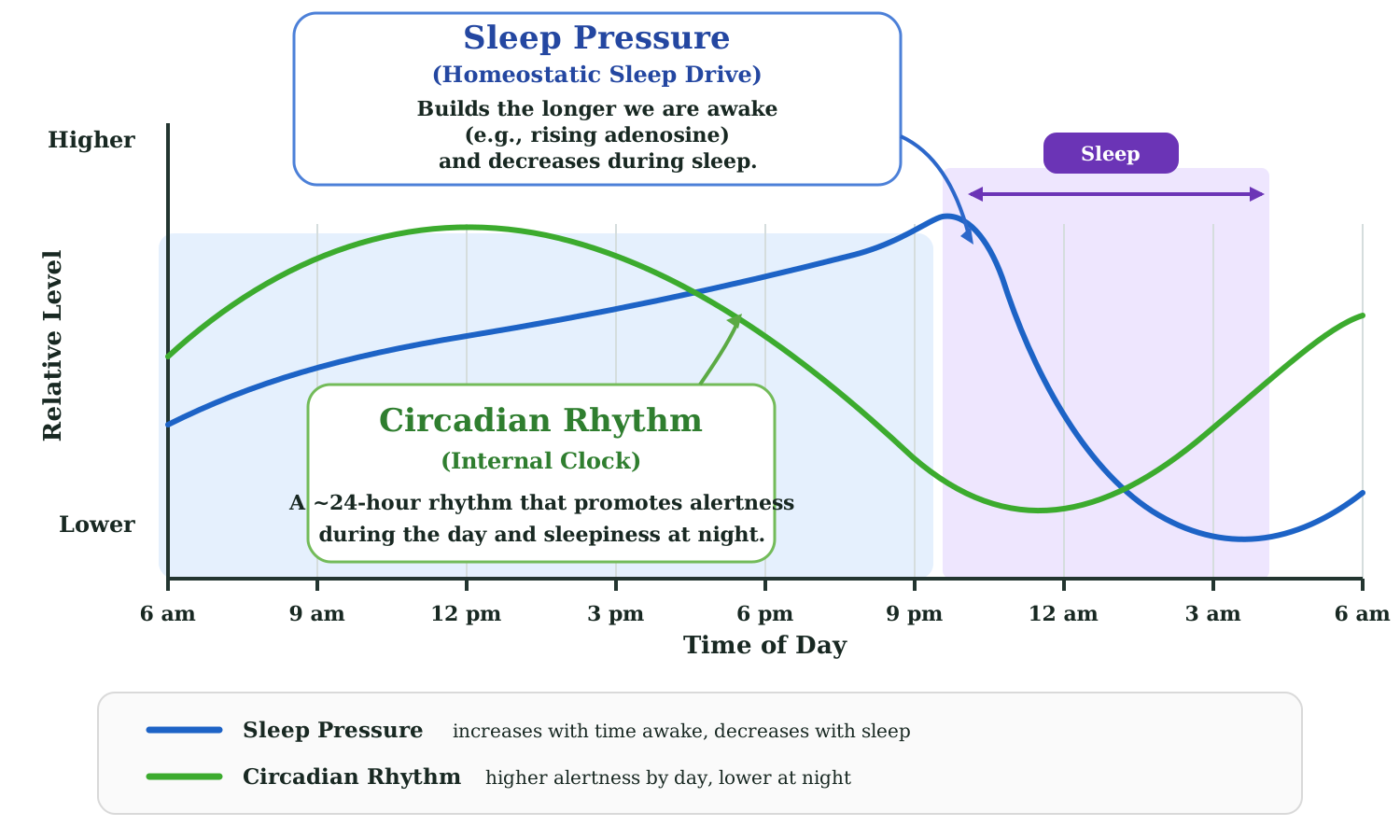
Our sleep-wake cycle is regulated primarily by two interacting biological systems: sleep pressure (our homeostatic sleep drive) and our circadian rhythm (our internal biological clock). One helps determine how strongly we need sleep, while the other helps determine when we are most likely to sleep or remain awake. Understanding how these systems work together helps explain why we become sleepy, how we stay alert, and what happens when our sleep patterns are disrupted.
Sleep pressure builds gradually throughout the day. As adenosine levels increase in the brain, we become sleepier. As those levels decrease during sleep, our need for sleep diminishes, helping us wake up refreshed. Interestingly, caffeine works largely by blocking adenosine receptors, making the brain respond as though adenosine levels were lower. This temporarily masks the sensation of sleepiness without eliminating the underlying need for sleep.
Our circadian rhythm operates as an approximately 24-hour internal clock, coordinating periods of wakefulness and sleepiness with the natural cycle of day and night. Influenced strongly by light exposure, this biological clock helps regulate body temperature, hormone secretion, alertness, and the timing of sleep. These two systems work together: sleep pressure creates the need for sleep, while the circadian clock helps determine when sleep is most likely to occur.
Beyond these two regulatory processes, another important component of the brain's sleep-wake circuitry is orexin (also called hypocretin), a chemical messenger produced by specialized neurons in the hypothalamus. Orexin helps maintain alertness and stabilize wakefulness by activating other brain systems that keep us awake. When orexin signaling is reduced, the brain can transition more readily toward sleep. This distinction has become particularly important because newer sleep medications can promote sleep by blocking orexin's wake-promoting effects.
Figure 37.1
The Two Systems That Regulate Sleep: Sleep Pressure and Circadian Rhythm
The Stages of Sleep
Once we fall asleep, another remarkable process begins. Rather than remaining in one continuous state of unconsciousness, the brain cycles repeatedly through different stages of sleep, each characterized by distinct patterns of electrical activity and physiological changes.
Sleep is broadly divided into two types: non-rapid eye movement (non-REM) sleep and rapid eye movement (REM) sleep. Non-REM sleep consists of three stages, progressing from light sleep to deep sleep.
Non-REM Sleep:
Stage N1: Transitioning Into Sleep. This is the lightest stage, when we begin drifting from wakefulness into sleep. Muscle activity decreases, brain activity slows, and we become less aware of our surroundings. This stage is usually brief, and we can be awakened relatively easily.
Stage N2: Light but Established Sleep. As sleep deepens, heart rate slows, body temperature falls, and the brain produces distinctive bursts of electrical activity called sleep spindles. These sleep spindles play an important role in memory processing and learning. N2 typically accounts for the largest proportion of an adult's total sleep.
Stage N3: Deep or Slow-Wave Sleep. This is the deepest stage of non-REM sleep, characterized by large, slow, synchronized electrical waves across the brain. During this stage, the body experiences substantial physiological restoration, including processes involved in tissue repair, hormonal regulation, and recovery. Deep sleep also contributes to memory consolidation and other important brain functions. Because it is difficult to awaken someone during this stage, N3 is often what people imagine when they think of truly deep, restorative sleep.
REM Sleep: The Active, Dreaming Brain. REM sleep is markedly different. Brain activity increases and, in several ways, resembles wakefulness. The eyes move rapidly beneath closed eyelids, vivid dreaming is common, and most skeletal muscles become temporarily inhibited, helping prevent us from physically acting out our dreams. REM sleep contributes to memory processing, emotional regulation, learning, and brain development, complementing the important functions of non-REM sleep.
These stages do not occur just once. Throughout a typical night, we pass through approximately four to six sleep cycles, each lasting roughly 80–120 minutes. During a typical early cycle, we progress from lighter non-REM sleep (N1 and N2) into deep sleep (N3), then return toward lighter sleep before entering REM sleep. This sequence varies throughout the night, and brief awakenings may occur between cycles. The distribution of sleep stages also changes as the night progresses. Deep non-REM sleep is generally concentrated in the earlier part of the night, while REM sleep becomes more prominent toward morning.
Figure 37.2
Sleep Architecture Across a Typical Night.
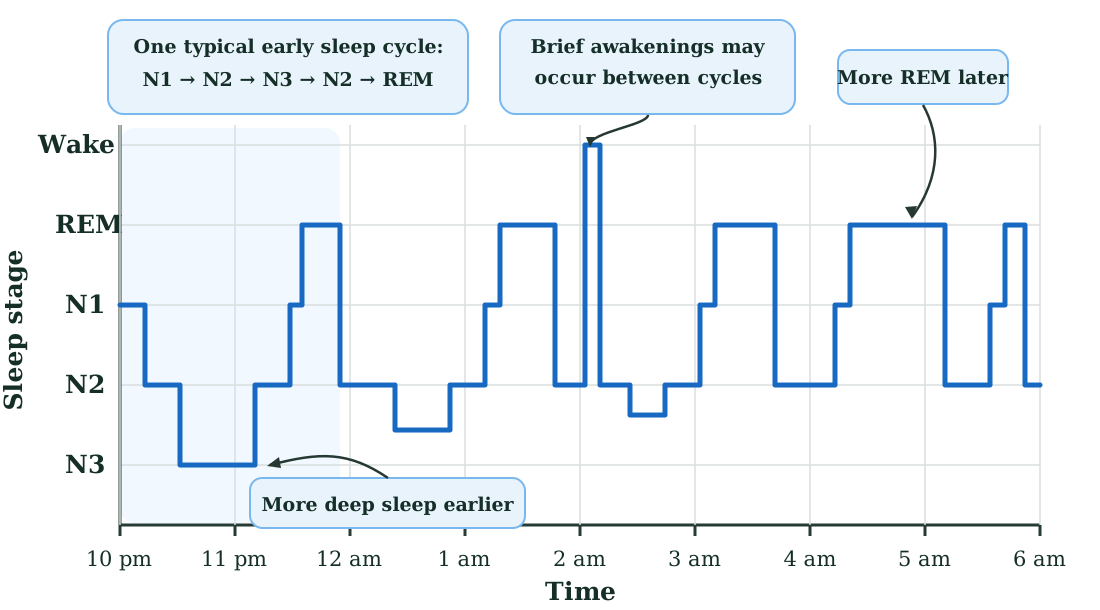
This changing pattern helps explain why simply counting hours does not tell the entire story. When we consistently shorten our sleep, particularly by waking earlier than our bodies naturally would, we may sacrifice important portions of the later REM-rich cycles. Similarly, frequent awakenings can disrupt the normal progression and continuity of sleep, even when total time in bed appears adequate.
What makes this process especially fascinating is that no single sleep stage performs every function. Deep sleep and REM sleep contribute differently to brain and body health, while lighter sleep stages also serve essential purposes. The brain naturally coordinates these stages throughout the night, adjusting their timing and distribution according to biological needs.
Sleep, then, is not simply a period of inactivity. It is a carefully orchestrated sequence of biological events that allows the brain and body to restore, reorganize, regulate, and prepare for what comes next. Understanding this process helps us appreciate why both sufficient sleep and its natural progression are so important.
And the importance of sleep extends far beyond the brain or simply feeling refreshed the next morning. As you may expect, its effects reach nearly every organ system in the body, influencing our health, physical performance, recovery, and ability to adapt.
The Whole-Body Benefits of Sleep
Throughout the night, an extraordinary range of biological processes helps maintain, restore, and strengthen the systems that keep us healthy and functioning at our best. These processes are interconnected, creating stacked benefits as improvements in one system support others. Let's explore how sleep supports these systems, beginning with cardiovascular health.
Cardiovascular Health

While we sleep, our cardiovascular system undergoes important physiological changes that reduce the workload on the heart and blood vessels. During non-REM sleep, particularly deep sleep, sympathetic nervous system activity (our fight-or-flight response) decreases, while parasympathetic activity (our rest-and-recovery response) becomes more prominent. Heart rate slows, and blood pressure typically falls by approximately 10–20% compared with daytime levels, a normal response known as nocturnal blood pressure dipping. These changes provide the cardiovascular system with a period of reduced demand, supporting healthy blood pressure regulation and cardiovascular function.1
When sleep is insufficient or frequently disrupted, sympathetic activity may remain elevated, reducing the normal nighttime decline in heart rate and blood pressure. Sleep restriction can also increase daytime blood pressure, while repeated disruptions may contribute to vascular dysfunction and inflammation. Over time, these changes can increase cardiovascular strain and contribute to hypertension and cardiovascular disease.2,3
Large prospective studies have linked insufficient or irregular sleep with an increased risk of coronary artery disease, stroke, atrial fibrillation, heart failure, and other cardiovascular conditions. Interestingly, research suggests that both how long we sleep and how consistently we sleep may influence cardiovascular health. Table 37.1 summarizes some of these findings, including the relative increases in cardiovascular risk associated with different patterns of insufficient or disrupted sleep.
Table 37.1
Sleep and Cardiovascular Health: What the Research Shows
| Cardiovascular condition | Research findings |
|---|---|
| Coronary artery disease (CAD) | A meta-analysis of more than 470,000 participants found that short sleep duration was associated with a 48% higher risk of developing or dying from coronary heart disease.4 |
| Stroke | The same meta-analysis found a 15% higher risk of stroke associated with short sleep duration.4 |
| Atrial fibrillation (AFib) | A 2024 meta-analysis found that shorter sleep duration was associated with an approximately 18% higher risk of developing AFib.5 |
| Heart failure (CHF) | A study involving nearly 90,000 adults found that sleeping fewer than six hours daily was associated with a 33% higher risk of developing heart failure compared with sleeping six to eight hours.6 |
| Major cardiovascular events | Among more than 72,000 adults, irregular sleep patterns were associated with a 26% higher risk of major cardiovascular events, including heart attack, stroke, and heart failure.7 |
Note: Reported percentages represent relative increases in risk, not absolute increases. These findings are derived from observational studies and do not establish causation.
Sleep-disordered breathing represents another important cardiovascular concern. Obstructive sleep apnea (OSA) is associated with hypertension, particularly resistant hypertension, as well as cardiac arrhythmias and pulmonary hypertension.8
Taken together, these findings reinforce an important message: sleep does more than give the cardiovascular system a period of rest. It helps maintain healthy heart and blood vessel function over time. Alongside physical activity and good nutrition, adequate, consistent, high-quality sleep is a foundational habit for cardiovascular health.
Metabolic and Endocrine Health

Sleep plays an important role in regulating how our bodies produce, store, and use energy. Throughout the night, coordinated hormonal and metabolic processes help regulate blood glucose, insulin sensitivity, appetite, and energy balance. Closely connected to our circadian rhythm, these processes influence how we respond to food and manage our metabolism. When sleep is insufficient or disrupted, glucose regulation, hunger, and food choices can all be affected.
One of the most striking effects of insufficient sleep is how quickly it can disrupt glucose regulation. In a controlled study of 20 healthy young men, restricting time in bed to five hours per night for just one week impaired glucose tolerance and reduced insulin sensitivity by approximately 20%. In other words, measurable metabolic changes can occur after only several nights of inadequate sleep.9
Sleep also plays an important role in regulating hunger, appetite, and food choices. When we don't get enough sleep, we often feel hungrier and become more attracted to calorie-dense, highly palatable foods that are often low in nutritional value. Part of this response may involve changes in appetite-regulating hormones, including ghrelin, which stimulates hunger, and leptin, which helps signal satiety. In a controlled study of 12 healthy young men, just two nights of restricted sleep were associated with a 28% increase in ghrelin, an 18% decrease in leptin, and a 24% increase in reported hunger. Insufficient sleep can influence not only how tired we feel, but also how much we want to eat and the foods we find most appealing.10
Perhaps even more surprising is how sleep influences body composition during weight loss. In a small but fascinating controlled study, 10 adults with overweight followed the same calorie-restricted diet under two different sleep conditions: 8.5 versus 5.5 hours of time in bed each night. After two weeks, participants lost approximately the same amount of total weight, but what they lost was strikingly different:
With restricted sleep, participants lost 55% less fat and 60% more fat-free mass, which includes muscle and other nonfat tissues. Despite similar calorie intake and overall weight loss, insufficient sleep substantially altered body composition in an unfavorable direction.11
Fortunately, the relationship between sleep and metabolic health also works in a more encouraging direction. In a randomized clinical trial involving 80 overweight adults who habitually slept fewer than 6.5 hours per night, participants receiving a sleep-extension intervention increased their sleep duration by approximately 1.2 hours per night and consumed an average of 270 fewer calories per day compared with the control group, without being instructed to change their diet or exercise habits.12
Together, these findings reinforce an important connection between our health habits: sleep influences how we regulate glucose, manage appetite, and maintain healthy body composition. Improving sleep may make our nutritional and physical activity efforts more effective, helping each habit reinforce the others.
Musculoskeletal Health, Recovery, and Adaptation

Think about what happens when you challenge your body through exercise. You lift weights, climb stairs, go for a run, or push yourself a little harder than you did before. You're not simply burning calories or using your muscles. You're creating a stimulus that tells your body it needs to adapt, to become stronger, more resilient, and more capable. News flash: much of that improvement takes shape after the workout is over.
During recovery, the body begins repairing, remodeling, and adapting to the physical demands you've placed upon it, and sleep plays an integral role in supporting these processes. Throughout the night, coordinated hormonal activity, protein metabolism, and cellular processes help maintain and repair muscle, bone, and connective tissue. Deep non-REM sleep is particularly important because it is associated with substantial growth hormone secretion, which contributes to tissue maintenance, repair, and metabolic regulation. In other words, sleep helps create the biological conditions that allow the work you've already done to translate into greater strength, endurance, and physical capacity.
What happens when we challenge our muscles through exercise but don't give them enough sleep to recover? Research suggests that insufficient sleep can interfere with the very processes responsible for maintaining and building muscle. In a controlled study of healthy young adults, just one night of total sleep deprivation reduced muscle protein synthesis by approximately 18%, while increasing cortisol levels and reducing testosterone. These findings are particularly meaningful because muscle protein synthesis is essential not only for recovering from exercise and building strength, but also for preserving muscle mass as we age. Even when we're exercising regularly and consuming adequate protein, insufficient sleep may make it harder for our bodies to fully benefit from those efforts.13
The effects of sleep extend beyond muscle repair and adaptation to how well we actually perform. Whether we're lifting weights, running, cycling, playing sports, or simply trying to stay physically active, insufficient sleep can compromise strength, endurance, speed, and coordination. In a systematic review and meta-analysis involving 69 studies, acute sleep loss was associated with an average 7.6% reduction in exercise performance, with negative effects observed across multiple categories, including strength, endurance, power, and skill-based activities.14 Fortunately, the relationship also appears to work in the opposite direction. In a small study of 11 collegiate basketball players, extending sleep over five to seven weeks was associated with faster sprint times, improved shooting accuracy, quicker reaction times, and reduced fatigue.15 Together, these findings reinforce an important point: sleep influences not only how well we recover from physical activity, but also how effectively we perform when it's time to challenge ourselves again.
Beyond recovery and performance, sleep may also play an important role in helping prevent injuries. When we're sleep-deprived, fatigue, slower reaction times, impaired coordination, and reduced attention may make us more vulnerable to mistakes and injuries during physical activity. In a systematic review and meta-analysis of seven studies involving adolescent athletes, those who consistently obtained insufficient or poor-quality sleep had approximately 58% higher odds of sports-related or musculoskeletal injuries compared with those who slept adequately.16 Although these findings are observational and primarily involve younger athletes, they highlight another important reason to prioritize sleep: it may help us not only perform better and recover more effectively, but also participate in physical activity more safely.
Becoming stronger, improving endurance, and maintaining physical capability require more than simply putting in the work. Our bodies also need the opportunity to recover, rebuild, and adapt. Sleep is an essential part of that process, supporting the physiological changes that help us translate physical activity into meaningful improvements in strength, performance, and resilience. The goal isn't simply to recover from what we did yesterday, but to build a body that's more capable of what we want to do tomorrow.
Neurocognitive Health

Think about everything your brain accomplishes throughout a typical day. You learn new information, solve problems, make decisions, develop skills, and accumulate countless experiences. But what happens to all that information when you go to sleep? Far from simply shutting down, your brain continues working, helping to process, organize, strengthen, and consolidate what you've learned. During sleep, newly acquired memories are selectively reactivated and integrated with existing knowledge, helping transform recent experiences into more stable, lasting memories. Different stages of sleep contribute to different aspects of learning and memory, including factual knowledge, motor skills, and the ability to recognize patterns and make connections. In a very real sense, sleep helps turn the experiences of today into the knowledge and capabilities we carry into tomorrow.
Sleep doesn't just help us retain what we've learned. It also prepares the brain to absorb new information. Think about how difficult it can be to concentrate, remember details, or learn something unfamiliar after a sleepless night. Research suggests that this isn't simply a matter of feeling tired. In a controlled study, researchers found that a single night of total sleep deprivation significantly impaired the brain's ability to form new memories, with reduced activity in the hippocampus, a region essential for learning and memory formation. The sleep-deprived participants performed substantially worse on subsequent memory tests than those who had slept normally. These findings demonstrate that sleep is important not only for strengthening existing memories, but also for preparing the brain to learn effectively the following day.17
Looking back, it's remarkable how often we've treated sleep as expendable. I remember pulling all-nighters studying for college exams and spending countless hours awake during residency, believing that more time studying or working would somehow make us better. Yet the science tells us something important: being awake longer doesn't necessarily mean we're learning more, thinking more clearly, or performing better.
Perhaps one of the most concerning effects of insufficient sleep is that we may not recognize how much it is affecting our ability to think and perform. Sleep deprivation can impair attention, concentration, reaction time, working memory, and decision-making, yet we may feel as though we've adapted to getting less sleep. In a landmark controlled study involving 48 healthy adults, researchers restricted sleep opportunities to four, six, or eight hours per night for two weeks. Participants limited to six hours per night developed progressively worsening cognitive performance, eventually demonstrating impairments on some tests comparable to those observed after an entire night without sleep. Those restricted to just four hours experienced even greater impairment, reaching levels on certain tests comparable to two nights of total sleep deprivation. Remarkably, while their objective performance continued to decline, their subjective feelings of sleepiness increased only modestly. In other words, we can become accustomed to feeling less sleepy without actually recovering our cognitive abilities.18
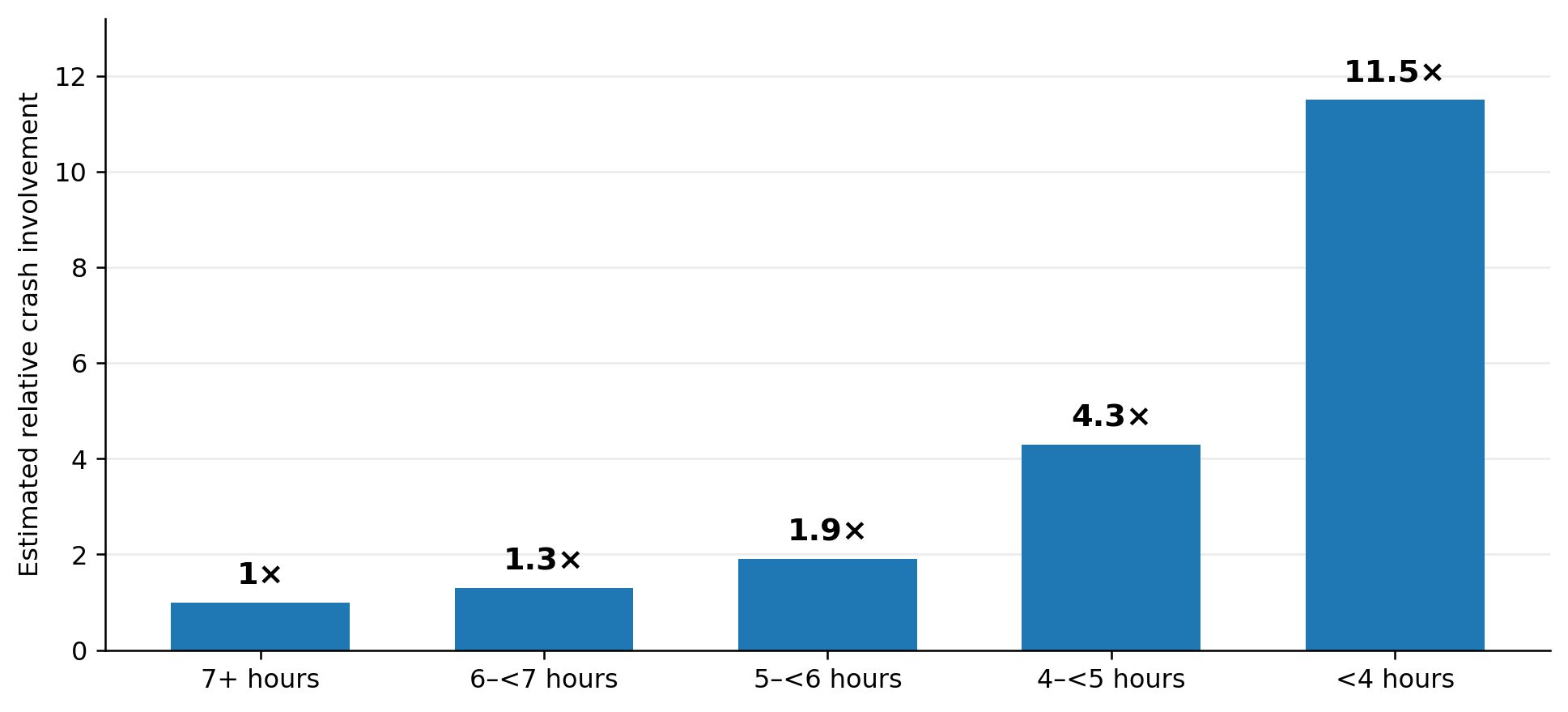
A particularly striking illustration of sleep deprivation's effects is its similarity to alcohol intoxication. In a landmark study published in Nature, researchers found that after approximately 17 hours of continuous wakefulness, performance on a hand-eye coordination task deteriorated to a level comparable to that observed at a blood alcohol concentration (BAC) of 0.05%. After 24 hours awake, performance was comparable to approximately 0.10% BAC, above the 0.08% legal driving limit in most U.S. states.19 The real-world implications are equally concerning. An AAA Foundation for Traffic Safety analysis found substantially higher crash involvement among drivers reporting fewer hours of sleep in the preceding 24 hours, especially below five hours (Figure 37.3).20 Being severely sleep-deprived can compromise our ability to drive safely, even when we believe we're functioning adequately.
Figure 37.3.
Sleep Duration and Motor Vehicle Crash Risk
Beyond learning and memory, sleep may serve another remarkable function: helping the brain maintain and clean itself. Throughout the day, normal brain activity produces metabolic waste products, including proteins such as amyloid-beta and tau, which are associated with neurodegenerative diseases when they accumulate abnormally. Researchers have identified a specialized fluid-exchange and waste-clearance pathway known as the glymphatic system, through which cerebrospinal fluid (CSF) interacts with fluid surrounding brain cells to help remove metabolic waste. In a landmark study published in Science, researchers demonstrated that this clearance process became substantially more active during sleep in mice, suggesting that sleep may provide an important opportunity for the brain to remove potentially harmful byproducts of normal cellular activity.21 Subsequent human imaging studies have demonstrated coordinated waves of brain activity, blood-flow changes, and CSF movement during non-REM sleep, providing further evidence that sleep is closely connected to the brain's fluid dynamics and potentially its waste-clearance mechanisms.22 Although scientists are still determining exactly how these mechanisms operate in humans and whether improving sleep directly reduces neurodegenerative disease risk, the emerging evidence suggests that sleep may do more than help us think better tomorrow. It may also support the long-term maintenance of the brain itself.
The potential long-term implications become especially important as we age. In a study of nearly 8,000 adults followed for approximately 25 years, those reporting six hours or less of sleep at ages 50, 60, and 70 had about a 30% higher risk of developing dementia than those consistently sleeping seven hours, even after accounting for several demographic, lifestyle, cardiovascular, and mental health factors.23 Although these observational findings cannot prove that insufficient sleep causes dementia, they raise an important possibility: the sleep habits we establish in midlife may influence our cognitive health decades later.
These findings reveal just how essential sleep is to the way our brains function, learn, and maintain their health. Sleep helps us consolidate memories, prepare for new learning, sustain attention, and make better decisions, while potentially supporting the biological processes that maintain brain health over time. Sleep isn't simply a way to restore our mental energy. It's an investment in our ability to think clearly, learn effectively, and remain cognitively capable throughout our lives.
Emotional and Psychological Health

Have you ever noticed how differently you respond to the world after a poor night's sleep? Small frustrations seem bigger, patience wears thin, and situations you would ordinarily handle with ease suddenly feel overwhelming. That's not simply a matter of being tired. Sleep plays an essential role in regulating our emotional responses, helping us manage stress, maintain perspective, and respond appropriately to the challenges of everyday life. During sleep, the brain helps process emotional experiences and maintain communication between regions involved in emotional reactivity, judgment, and self-regulation; when sleep is insufficient or disrupted, that balance can become less effective, leaving us more irritable, emotionally reactive, and vulnerable to stress. In other words, sleep doesn't simply influence how we feel. It also affects how we interpret situations, respond to other people, and manage life's inevitable frustrations.
Why does a poor night's sleep make us more emotionally reactive? Part of the answer appears to involve the relationship between the amygdala, a brain region involved in detecting emotionally significant events, and the prefrontal cortex, which helps regulate and put those emotional responses into perspective. In a landmark brain-imaging study, researchers found that after being kept awake for approximately 35 hours, participants demonstrated approximately 60% greater amygdala reactivity to negative emotional images compared with those who had slept normally. Even more interesting, the sleep-deprived participants showed reduced functional connectivity between the amygdala and the prefrontal cortex, suggesting that the brain's ability to regulate emotional responses had become less effective.24 These findings help explain why insufficient sleep can make everyday frustrations feel more intense, disagreements more difficult to navigate, and our emotional reactions harder to control.
The relationship between sleep and psychological health extends well beyond everyday irritability and emotional reactions. Both how much we sleep and how well we sleep matter. Insufficient or disrupted sleep can increase our vulnerability to stress, anxiety, and depression, while these same conditions can make it more difficult to fall asleep or remain asleep, creating a vicious cycle that can be difficult to break. Fortunately, research suggests that improving sleep can help interrupt this cycle. In a large meta-analysis of 65 randomized controlled trials involving more than 8,600 participants, interventions that improved sleep quality were also associated with meaningful improvements in mental health, including reductions in symptoms of depression, anxiety, stress, and repetitive negative thinking. Importantly, the greater the improvement in sleep quality, the greater the improvement in mental health.25 These findings reinforce an encouraging message: improving sleep isn't simply about feeling less tired. It may also help us become more emotionally balanced, psychologically resilient, and better equipped to navigate life's challenges.
In short, sleep influences far more than our energy levels. It affects our mood, how we experience emotions, respond to stress, interact with others, and navigate the challenges of everyday life. When we're well rested, we're often better equipped to approach difficulties with patience, perspective, and emotional balance. Better sleep doesn't eliminate life's challenges, but it can help us face them with greater patience, perspective, and resilience.
Immune Function and Cellular Health

Sleep is one of the body's important allies in maintaining a strong, responsive immune system. While we sleep, immune cells and signaling molecules coordinate activities involved in identifying threats, fighting infections, and developing immune memory. But what happens when we don't get enough sleep? In a study involving 164 healthy adults, researchers monitored participants' sleep for one week, then deliberately exposed them to a common cold virus under controlled conditions. Those sleeping fewer than six hours per night had approximately four times the odds of developing a cold compared with those sleeping more than seven hours (OR 4.24–4.50).26 Although this study cannot establish that short sleep directly caused the increased susceptibility, it illustrates how closely our sleep habits may be connected to our ability to resist infections.
Sleep also helps regulate inflammation and the cellular processes involved in maintaining healthy tissues. Inflammation is an essential part of immune defense and repair, but when it becomes persistently elevated, it can contribute to chronic disease. By now, you've probably seen this pattern: chronic, low-grade inflammation plays an important role in the development and progression of cardiovascular disease, particularly atherosclerosis, as well as insulin resistance, type 2 diabetes, and several other chronic conditions. In a systematic review and meta-analysis of 72 studies involving more than 50,000 participants, sleep disturbances were associated with higher levels of inflammatory markers, including C-reactive protein (CRP) and interleukin-6 (IL-6).27 An occasional poor night's sleep is part of life. The bigger picture is that consistently good sleep supports not only our ability to defend against illness, but also the biological balance that helps us maintain health, repair tissues, and recover from the demands of everyday life.
Integrated Whole-Body Benefits of Sleep

The benefits of sleep extend beyond the systems we've explored. Sleep and circadian rhythms also influence gastrointestinal function, including digestive activity and the gut microbiome.28 Reproductive health may also be affected, with studies identifying associations between insufficient or disrupted sleep and reproductive hormone regulation, fertility, and reproductive function in both men and women.29 Even cancer research has identified important connections. The International Agency for Research on Cancer has classified night shift work involving circadian disruption as probably carcinogenic to humans, although this does not mean that occasional poor sleep or short sleep duration has been proven to cause cancer.30 These findings illustrate how the influence of sleep extends into biological systems and processes that we are still working to fully understand.
These benefits do not occur independently. Better cardiovascular regulation supports metabolic health, healthy immune function contributes to recovery and tissue maintenance, and improved cognitive and emotional function helps us make better decisions about nutrition, physical activity, and the other habits that shape our lives. These are stacked benefits. Improvements in one system reinforce improvements in others. Sleep is not simply another healthy habit to add to our routine. It is one of the foundations that helps our other healthy habits work better, supporting our ability to function, recover, adapt, and thrive.
The Whole-Body Impact of Sleep: At a Glance
Cardiovascular Health
Supports lower nighttime heart rate and blood pressure, reducing cardiovascular workload.
Insufficient sleep can contribute to vascular dysfunction, inflammation, and hypertension.
Short or irregular sleep is associated with increased risks of coronary artery disease, stroke, atrial fibrillation, heart failure, and major cardiovascular events.
Obstructive sleep apnea is associated with hypertension, arrhythmias, and pulmonary hypertension.
Metabolic and Endocrine Health
Supports glucose regulation, insulin sensitivity, and hormonal balance.
Sleep deprivation can increase hunger and cravings for calorie-dense foods.
Insufficient sleep can negatively affect body composition during weight loss.
Extending sleep may reduce caloric intake in people who habitually sleep too little.
Musculoskeletal Health, Recovery, and Adaptation
Supports muscle protein synthesis, tissue repair, and physical adaptation.
Insufficient sleep can impair strength, endurance, coordination, and physical performance.
Poor sleep is associated with increased sports-related injury risk.
Neurocognitive Health
Supports memory consolidation, learning, attention, and decision-making.
Sleep deprivation impairs cognitive performance, even when we don't recognize it.
Sleep may support the brain's waste-clearance processes.
Chronically insufficient sleep is associated with increased dementia risk.
Emotional and Psychological Health
Supports emotional regulation, stress management, and psychological resilience.
Insufficient sleep increases emotional reactivity and can impair emotional control.
Improving sleep quality can reduce symptoms of anxiety, depression, and stress.
Immune Function and Cellular Health
Supports immune defense, immune memory, and tissue maintenance.
Insufficient sleep is associated with greater susceptibility to infections.
Disrupted sleep is associated with increased inflammation.
Miscellaneous: Other Whole-Body Effects
Gastrointestinal: Sleep and circadian rhythms influence digestive function and the gut microbiome.
Reproductive: Insufficient or disrupted sleep is associated with changes in reproductive hormones and fertility.
Cancer: Night shift work involving circadian disruption is classified as probably carcinogenic.
How Much Sleep Do You Really Need?
So, after everything we've discussed about the remarkable benefits of sleep and the consequences of not getting enough, an obvious question remains: How much sleep do we actually need? Most adults have heard the familiar recommendation of seven to nine hours per night, and there's good science behind that range. The American Academy of Sleep Medicine and Sleep Research Society recommend that adults regularly obtain at least seven hours of sleep to support optimal health. Similarly, the National Sleep Foundation recommends 7–9 hours for adults ages 18–64 and 7–8 hours for adults 65 and older. These recommendations were reaffirmed in a comprehensive 2026 review of the scientific literature. Importantly, they are guidelines based on population-level evidence, not rigid biological requirements that apply identically to every individual.31,32
But here's an important distinction: the amount of sleep we need isn't the same for everyone. Genetics, age, health, and individual biology all influence sleep requirements. Some people function well with approximately seven hours, while others consistently need closer to eight or nine. A small number of individuals are naturally short sleepers who appear to function well on substantially less sleep, but this is uncommon and should not be confused with simply becoming accustomed to chronic sleep deprivation. Sleep needs may also increase temporarily during illness, recovery from accumulated sleep loss, or periods of substantial physical or mental demand. And while older adults may experience changes in sleep patterns and often sleep somewhat less, aging doesn't eliminate the biological need for adequate, restorative sleep. The goal isn't to sleep as little as possible. It's to consistently obtain the amount of sleep your body and brain actually need.
Another important consideration is that time in bed is not the same as time asleep. Spending eight hours in bed doesn't necessarily mean we're getting eight hours of sleep. It takes time to fall asleep, and most of us experience brief awakenings throughout the night, some of which we may not even remember. This brings us to an important concept called sleep efficiency, which represents the percentage of time spent in bed that we're actually asleep. For example, sleeping seven hours during an eight-hour period in bed results in a sleep efficiency of 87.5%. Generally, a sleep efficiency of 85% or higher is considered good, with 90% or higher reflecting particularly efficient sleep.33 Many consumer wearables estimate this percentage, offering a useful way to follow sleep patterns over time. Although their measurements are not always perfectly accurate, many are sufficiently consistent to help identify trends in sleep duration, timing, and efficiency over time. The goal isn't to achieve a perfect sleep efficiency score, but to consistently obtain sufficient, restorative sleep.
What about catching up on sleep over the weekend? Many of us have tried to compensate for short workweek nights by sleeping longer on Saturday and Sunday. Additional recovery sleep can certainly be helpful when we're sleep-deprived, but it doesn't necessarily reverse all the consequences of repeatedly getting insufficient sleep. In a controlled study, researchers found that allowing participants to sleep longer over the weekend did not prevent the metabolic disturbances associated with recurrent sleep restriction, including impaired insulin sensitivity.34 This doesn't mean we should avoid sleeping longer when we need recovery. It means that consistently obtaining sufficient sleep is generally a better strategy than repeatedly accumulating sleep debt and hoping to make up for it later.
So how can you tell whether you're getting enough sleep? Start with the recommended seven-to-nine-hour range, then pay attention to how you feel and function over time. Do you generally wake feeling reasonably refreshed? Can you remain alert and focused throughout the day without struggling to stay awake? Are you recovering well from physical activity and managing your usual responsibilities without persistent fatigue? These are useful clues, although feeling accustomed to less sleep doesn't necessarily mean we're functioning optimally, as we've already seen. Persistent daytime sleepiness, unrefreshing sleep, or difficulty functioning despite allowing adequate time for sleep deserves further attention. For most adults, aiming for approximately seven to nine hours of actual sleep each night is a sensible starting point, with enough flexibility to accommodate individual needs. The goal is not to chase a perfect number, but to give your body the consistent opportunity to obtain the restorative sleep it needs.
Timing Matters: Your Body's Internal Clock
We've established that getting enough sleep is essential, but here's another important consideration: when we sleep matters, too. Our bodies don't simply respond to the number of hours we spend asleep. They also operate according to an internal biological clock that helps coordinate periods of sleepiness and alertness, along with daily rhythms in body temperature, hormone secretion, metabolism, and numerous other physiological processes. As we discussed earlier, this approximately 24-hour system is known as our circadian rhythm. When our sleep schedule aligns with our internal clock, falling asleep, waking up, and functioning throughout the day generally become easier. But when that alignment is repeatedly disrupted, we may struggle to obtain restorative sleep even when we allow ourselves enough time in bed.
Perhaps surprisingly, the consistency of our sleep schedule may be just as important as the number of hours we sleep. In a prospective study involving nearly 61,000 UK Biobank participants, researchers used wearable devices to measure sleep regularity and duration. Participants were divided into five groups based on how consistently they slept and awakened. Over an average follow-up of approximately 6.3 years, the four groups with more regular sleep patterns had a 20–48% lower risk of all-cause mortality compared with the least regular group. Interestingly, even after accounting for differences in sleep duration, greater sleep regularity remained associated with lower mortality risk and was a stronger predictor than sleep duration in the study's statistical models.35 These observational findings suggest that sleep timing and regularity deserve attention alongside sleep duration.
One of the most powerful influences on our internal clock is light. Exposure to bright light after waking, particularly natural outdoor light, helps reinforce the body's daytime signals and can shift our circadian rhythm toward an earlier schedule. Conversely, bright light late in the evening, including light from overhead fixtures, televisions, smartphones, and other electronic devices, can delay the body's internal clock and interfere with the normal timing of melatonin secretion. Melatonin is a hormone produced primarily by the pineal gland in the brain that rises with darkness and helps signal biological nighttime. It does not simply switch sleep on, but rather helps coordinate the body's transition toward its nighttime state.36 In practical terms, getting daylight after waking and reducing unnecessary bright light in the hours before bedtime can help our internal clock stay aligned with our desired sleep schedule.
Another challenge arises when our daily schedules conflict with our biological preferences. Some people are naturally more alert in the morning, while others tend to feel and perform better later in the day. These differences, known as chronotypes, are influenced by genetics, age, and environmental factors. Problems can arise when our work, school, or social obligations repeatedly force us to sleep at times that conflict with these natural tendencies. For example, someone who wakes at 6 a.m. throughout the workweek but sleeps until 10 a.m. every weekend may experience a repeated shift in sleep timing sometimes referred to as social jet lag.37 Similar challenges occur with rotating shifts, overnight work, and travel across time zones. The goal isn't to force everyone into the same bedtime or wake-up time, but to establish a schedule that provides adequate sleep while remaining reasonably consistent with our biological rhythms and daily responsibilities.
So what does this mean for everyday life? One of the simplest and most effective strategies is to establish a consistent wake-up time, including weekends whenever practical. A regular waking schedule, combined with appropriate morning light exposure, helps reinforce the timing of our internal clock. Getting in a short morning walk soon after waking is an excellent way to combine natural light exposure with physical activity. From there, we can work backward to choose a bedtime that allows sufficient sleep, rather than staying awake until we're exhausted and hoping to catch up later. Aiming to keep bedtime and wake-up time within roughly 30–60 minutes of our usual schedule is a reasonable practical goal, although it isn't a strict biological threshold. Occasional late nights, celebrations, travel, and schedule disruptions are part of life. What matters is the pattern we establish over time. Just as the amount of sleep matters, so does its timing. A consistent rhythm gives our bodies a more predictable opportunity to rest, recover, and function at their best.
Creating a Sleep-Friendly Environment
Think about how much effort we put into creating the right environment for other activities. We organize our workspaces to improve productivity, choose comfortable shoes and equipment for exercise, and arrange our kitchens to make preparing healthy meals easier. Yet we often give surprisingly little thought to the environment in which we spend nearly one-third of our lives. Our bedrooms can either support our ability to fall asleep and remain asleep or create obstacles that interfere with it. The good news is that improving our sleep environment doesn't necessarily require expensive mattresses, sophisticated technology, or a complete bedroom makeover. Often, a few relatively simple changes can make a meaningful difference. Let's explore a few ways to create a more sleep-friendly environment: temperature, light, noise, comfort, and how we use our bedrooms.
1. Light: Embrace the Dark
Darkness is a powerful component of a sleep-friendly environment. As we discussed earlier, light is one of the strongest signals regulating our circadian rhythm, but its influence doesn't necessarily stop once we've fallen asleep. Interestingly, research suggests that exposure to light during sleep may affect physiological processes even when we remain asleep. In a small controlled laboratory study involving 20 healthy young adults, researchers compared sleeping in a dim environment with sleeping under moderate room lighting. After just one night of exposure to moderate light, participants demonstrated higher nighttime heart rates, reduced heart rate variability, and increased insulin resistance the following morning.38 Our bodies can respond to environmental light even while we're sleeping. Practical changes include using blackout curtains or shades, covering unnecessary indicator lights, dimming illuminated clocks, and keeping electronic screens from lighting up the bedroom. If getting up during the night is necessary, particularly for older adults, a dim, low-positioned nightlight can provide safer navigation without illuminating the entire room.
2. Noise: Protect Your Sleep
Noise can be equally disruptive, and not simply because it wakes us up. Our brains continue monitoring the surrounding environment during sleep, responding to potentially meaningful sounds even when we're not consciously aware of them. Sudden or intermittent noises, such as traffic, barking dogs, conversations, or a television playing in another room, can produce brief arousals or shifts into lighter stages of sleep. Repeated disruptions may fragment sleep and reduce its restorative quality, even when we don't remember waking up. A 2026 systematic review and meta-analysis of 68 observational studies found significant associations between environmental noise exposure, particularly transportation noise, and sleep disturbances.39
Fortunately, relatively simple interventions may help, including reducing household noise, silencing unnecessary phone notifications, closing windows, or using comfortable earplugs. Some people also use a fan or sound machine to mask unpredictable environmental noise, but the evidence for continuous white or broadband noise is mixed. Some studies suggest benefit, while others show little improvement or even altered sleep architecture.40 More recent research found that pink noise reduced REM sleep, while intermittent environmental noise reduced deep N3 sleep, suggesting that continuous sound is not always biologically neutral.41 When possible, a quiet sleeping environment is preferable. Sound machines may be helpful when disruptive background noises cannot be eliminated, but there is little reason to introduce continuous noise into an otherwise quiet bedroom.
3. Temperature: Keep It Comfortably Cool
Temperature is particularly important because changes in how our bodies regulate heat help us both fall asleep and stay asleep throughout the night. As bedtime approaches, our internal biological clock helps coordinate changes in body temperature, hormonal activity, and circulation. Blood vessels near the skin, particularly in our hands and feet, dilate, allowing heat to move from the body's core toward the surrounding environment. This helps facilitate the decline in core body temperature associated with sleep onset. An excessively warm bedroom can interfere with this process, making it harder to fall asleep and potentially disrupting sleep throughout the night.
Many sleep organizations suggest a relatively cool bedroom, often approximately 60–67°F (16–19°C), as a starting point. However, there is no single ideal temperature for everyone. Comfort depends on age, bedding, clothing, humidity, and individual preference. In general, sleep quality tends to worsen when the bedroom becomes too warm. The goal is to create a comfortably cool sleeping environment that works for you, rather than trying to achieve a particular thermostat setting.
4. Comfort: Make Your Bed Work for You
Comfort matters. Our mattress, pillows, bedding, or sleeping position can contribute to pressure points, neck or back discomfort, frequent repositioning, and nighttime awakenings. But this doesn't mean that the most expensive mattress is necessarily the best. Individual preferences and body characteristics all influence what feels comfortable and supportive. Bedding also affects temperature regulation. Heavy blankets, poorly ventilated materials, or excessive insulation may trap heat, while lighter or more breathable fabrics may help maintain a more comfortable sleeping temperature. Even smaller issues, such as an uncomfortable pillow, a room that's too dry, or nighttime nasal congestion related to allergens, can become meaningful sleep disruptions when they occur repeatedly.
There is no shortage of products designed to improve sleep, ranging from specialized pillows and mattress toppers to cooling pads, adjustable beds, and sophisticated systems that automatically regulate bed temperature throughout the night. Some of these technologies may be helpful, particularly for people who struggle with nighttime temperature regulation or physical discomfort, but more expensive does not necessarily mean better sleep. Before investing in a new mattress or elaborate sleep system, start by asking a simpler question: What in your current sleep environment is making you uncomfortable or waking you up? Sometimes changing your pillow, adjusting your bedding, or modifying the bedroom temperature may be all that is needed.
5. Bedroom Habits: Make Your Bedroom a Place for Sleep
Another consideration is how we use our bedrooms. For many people, the bedroom has gradually become an extension of the office, living room, and entertainment center. We answer emails, scroll through social media, watch television, review tomorrow's responsibilities, or lie awake thinking about everything we still need to accomplish. These activities can make it harder for the mind and body to recognize the bedroom as a place to disengage from the demands of the day.
The bed itself deserves an even clearer boundary. Behavioral sleep medicine uses an approach called stimulus control to strengthen the association between being in bed and being asleep. One of its central recommendations is to reserve the bed primarily for sleep and intimacy, rather than work, entertainment, or prolonged wakefulness. For people who struggle to fall asleep or find themselves lying awake for prolonged periods during the night, reinforcing that connection can be particularly valuable.
Ultimately, creating a sleep-friendly environment is about removing unnecessary obstacles to something our bodies are already biologically designed to do. Reducing light and noise, maintaining a comfortably cool room, choosing supportive bedding, and minimizing distractions can all help create conditions that favor more continuous, restorative sleep. No bedroom will be perfect every night, and that's not the goal. Small, thoughtful changes to our sleep environment can make it easier to support the recovery and restoration our bodies need to function, adapt, and thrive.
Lifestyle Strategies for Better Sleep
We've explored why sleep is essential, how much we need, why timing matters, and how our bedroom environment can support restorative sleep. But there's another important piece of the puzzle: the choices we make throughout the day can influence how well we sleep at night. What we drink, when we exercise, how we eat, and even how we spend the final hour before bedtime can affect our ability to fall asleep and remain asleep. The encouraging news is that many of these behaviors are within our control. And just as we've seen with physical activity and nutrition, small, consistent changes can produce meaningful benefits. Let's explore some practical lifestyle strategies that can help us sleep better.
1. Caffeine: Timing Matters More Than You
Think
For many of us, caffeine is part of our daily routine. That morning cup
of coffee helps us feel alert and ready for the day. But caffeine
doesn't eliminate our need for sleep. As we discussed earlier, it works
primarily by blocking adenosine receptors in the brain, temporarily
masking the sleep pressure that builds throughout the
day. And here's the catch: caffeine stays in our
systems much longer than we might realize. With an average half-life of
approximately four to six hours, a substantial portion of that afternoon
coffee may still be circulating when we're ready for bed.
Both caffeine dose and timing matter. In a 2025 randomized crossover study, 100 mg of caffeine did not significantly disrupt sleep, even when consumed four hours before bedtime. However, 400 mg interfered with sleep even when consumed 12 hours before bedtime, with greater disruption closer to bedtime. Interestingly, participants didn't always recognize that their sleep had been affected. A 2023 meta-analysis of 24 studies similarly found that caffeine reduced total sleep time by approximately 45 minutes and sleep efficiency by approximately 7%.42,43
So what does 400 mg look like in everyday life? For perspective, a Starbucks Pike Place brewed coffee contains approximately 235 mg in a Tall (12 oz), 315 mg in a Grande (16 oz), and 390 mg in a Venti (20 oz). That's nearly 400 mg in a single large coffee! Caffeine content varies by beverage and preparation method and is also found in tea, energy drinks, soft drinks, pre-workout supplements, and some medications. The takeaway is simple, pay attention to both how much caffeine you consume and when you consume it. Larger doses may disrupt sleep many hours later, so reducing afternoon and evening caffeine is a sensible starting point. The goal isn't necessarily to eliminate caffeine, but to enjoy its benefits without sacrificing the restorative sleep we need.
2. Physical Activity: Move More to Sleep
Better
We've already explored the remarkable benefits of physical activity, but
there's another benefit worth emphasizing: regular movement can help us
sleep better, creating yet another stacked benefit. Exercise influences
sleep through several interconnected mechanisms, including changes in
body temperature, sleep pressure, stress regulation, and circadian
signaling. Research suggests that regular physical activity can improve
subjective sleep quality, with some studies also demonstrating
improvements in sleep duration and efficiency. In a systematic review
and meta-analysis involving 86 randomized controlled trials and more
than 7,200 participants, researchers found that several forms of
exercise, including aerobic activity, resistance training, and mind-body
exercise, were associated with improvements in sleep
quality.44
But what about exercising close to bedtime? You've probably heard that we should avoid evening workouts because they can interfere with sleep. Well, the evidence is a bit more nuanced. A systematic review and meta-analysis of 23 studies found that evening exercise generally did not impair sleep in healthy adults. However, vigorous exercise ending within approximately one hour of bedtime may interfere with sleep onset or sleep efficiency, particularly when body temperature and physiological arousal remain elevated.45 In practical terms, the best time to exercise is a time you can maintain consistently, while allowing enough time to wind down if evening workouts leave you feeling energized.
3. Alcohol: Feeling Sleepy Isn't the Same as Sleeping
Well
Alcohol can create a particularly misleading relationship with sleep.
Many people notice that a glass of wine or another alcoholic beverage
makes them feel relaxed or sleepy, and alcohol's sedating effects can
sometimes shorten the time it takes to fall asleep. But falling asleep
more quickly doesn't necessarily mean we're getting better sleep.
Alcohol alters normal sleep architecture, particularly rapid eye
movement (REM) sleep, and can contribute to sleep disruption as it is
metabolized. It may also worsen snoring and obstructive sleep apnea in
susceptible individuals.
A systematic review and meta-analysis published in 2025 examined 27 studies evaluating alcohol's effects on sleep in healthy adults. Researchers found that consuming approximately two standard drinks delayed the start of REM sleep and reduced the amount of time spent in REM sleep. Higher alcohol consumption caused even greater disruption. The effects on total sleep time and sleep efficiency were less consistent.46 The takeaway is straightforward: alcohol may make us feel sleepy, but it is not a reliable way to obtain restorative sleep. Reducing alcohol consumption, especially near bedtime, is one practical way to protect sleep quality. Alcohol's broader effects on health are discussed in greater detail in Chapter 35.
4. Eating and Drinking: Give Digestion Time to
Settle
The timing and composition of our evening meals can also influence
sleep. Most of us have experienced that post-meal “food coma” after a
particularly large dinner. But feeling sleepy after a big meal doesn't
necessarily translate into sleeping well. Going to bed uncomfortably
full may contribute to indigestion, abdominal discomfort, or
gastroesophageal reflux, particularly when lying down shortly after
eating. Large, high-fat meals may be especially troublesome for
individuals prone to reflux. On the other hand, going to bed excessively
hungry can also make it difficult to settle into sleep. The goal isn't
to establish rigid rules about when everyone must eat, but to develop an
evening eating pattern that supports comfort and adequate nutrition.
For individuals with nighttime reflux symptoms, the American College of Gastroenterology suggests avoiding meals within approximately two to three hours of bedtime, although the evidence supporting this recommendation is relatively limited.47 A small evening snack is not necessarily harmful if you're hungry, but repeatedly eating large meals immediately before lying down may be worth reconsidering. Fluid timing matters as well. Staying adequately hydrated throughout the day supports overall health, but consuming substantial amounts of fluid just before bed may increase nighttime awakenings to urinate. Avoid going to bed uncomfortably full or excessively hungry, and consider limiting large amounts of fluid close to bedtime.
5. Establish a Wind-Down Routine: Prepare Your Mind for
Sleep
Have you ever climbed into bed physically exhausted, only to find that
your mind can't slow down? You start reviewing tomorrow's
responsibilities, replaying conversations, thinking about unfinished
work, or worrying about something you can't resolve at midnight. Our
bodies may be ready to sleep while our minds are still operating at full
speed. This is one reason a consistent wind-down routine can be so
valuable. Rather than expecting ourselves to transition instantly from
the demands of the day into sleep, we can create a period that signals
it's time to slow down.
For some people, this might involve reading, listening to relaxing music, stretching gently, practicing slow breathing, or taking a warm shower or bath. Others may benefit from writing down tomorrow's priorities or unresolved thoughts before getting into bed, reducing the temptation to mentally rehearse them throughout the night. Several of these strategies connect with habits we'll explore in greater detail in Chapter 42, Mindfulness or Meditation, and Chapter 45, Gratitude Journaling.
There is also evidence supporting more structured relaxation practices. In a randomized clinical trial involving 49 older adults with moderate sleep disturbances, a six-week mindfulness-based program produced greater improvements in subjective sleep quality than sleep hygiene education alone.48 The goal is to create a predictable transition from the activity and demands of the day into the relative calm that makes sleep more likely.
6. Technology and Screens: Know When to
Disconnect
Modern technology has brought remarkable convenience into our lives, but
it has also made it easier than ever to remain mentally engaged when we
should be unwinding. Smartphones, tablets, computers, and televisions
provide an almost unlimited supply of information, communication, and
entertainment. The issue isn't simply that screens produce light,
although bright light late in the evening can influence circadian
timing. It's also what we're doing with them. Answering work emails,
reading upsetting news, scrolling through social media, or watching an
exciting program can keep our minds alert at a time when we're trying to
settle down.
A 2024 National Sleep Foundation expert consensus statement concluded that screen use can negatively affect sleep health, while recognizing that the effects depend on the timing, content, and nature of the activity.49 A reasonable strategy is to reduce stimulating screen activities during the final 60 minutes before bedtime and avoid allowing notifications or unnecessary digital interruptions to disturb sleep. That doesn't mean every screen must be eliminated or that reading something relaxing on an electronic device is automatically harmful. What matters is whether our technology is helping us unwind or keeping our minds engaged when we're trying to sleep. We'll explore this further in Chapter 41, Digital Detox: Reclaiming Attention and Calm.
7. Napping: Helpful Recovery or a Hidden Sleep
Disruptor?
For those who enjoy an occasional afternoon nap, a little extra sleep
can provide a welcome boost in alertness and concentration, particularly
after a poor night's sleep. But timing and duration matter. Because
sleep pressure builds throughout the day, long or late-afternoon naps
can make it harder to fall asleep at night. A brief nap of
approximately 20–30 minutes in the early afternoon is generally a
reasonable approach, helping restore alertness while reducing
the likelihood of waking groggy (sleep inertia). Longer naps may be
useful for shift workers or those recovering from significant sleep
loss, but frequent daytime sleepiness despite adequate nighttime sleep
may signal an underlying sleep problem. Naps can be
helpful, but they shouldn't routinely replace a good night's sleep.
Taken together, these strategies reveal something encouraging - improving sleep isn't necessarily about making one dramatic change. It's often about recognizing how our daily choices influence the biological processes that prepare us for rest. Caffeine timing, regular exercise, alcohol consumption, evening meals, relaxation, screen habits, and naps all provide opportunities to make sleep a little easier and more restorative. Not every strategy will matter equally for every person, and we don't need to change everything at once. The most sustainable improvements often begin by identifying the one or two behaviors that may be interfering most with sleep and making manageable changes. And while these habits can support healthier sleep, persistent sleep difficulties sometimes require more than lifestyle adjustments, which brings us to an important next question: what happens when we're doing many of the right things but still aren't sleeping well?
When Sleep Doesn't Come Easily
We've explored the many ways we can support healthier sleep, from maintaining consistent schedules and creating a comfortable bedroom environment to adjusting our daily habits. But what happens when we're doing many of the right things and still struggle to sleep?
Not all sleep difficulties are the same. Some people struggle to fall asleep. Others fall asleep easily but awaken repeatedly throughout the night. Still others wake much earlier than intended or spend eight hours in bed only to wake feeling exhausted. Recognizing these patterns matters because different sleep problems may have different underlying causes and require different approaches to treatment.
These experiences can be frustrating, particularly when we know how important sleep is to our health. The important thing to recognize is that not every sleep problem can be solved simply by going to bed earlier, turning off our phones, or making the bedroom darker. Sometimes, persistent sleep difficulties reflect an underlying condition that deserves greater attention. Let's explore some common problems, what may be causing them, and when seeking medical advice may be appropriate.
Occasional Sleeplessness vs. Chronic Insomnia
Almost everyone experiences occasional difficulty sleeping. Stressful days, travel, illness, or changes in routine can interfere with our normal sleep patterns. A restless night or two is generally not a reason for alarm, and trying too hard to compensate can sometimes create additional frustration. Sleep naturally varies from one night to another, and our bodies are remarkably capable of adjusting to occasional disruptions. The concern arises when difficulty falling asleep, staying asleep, or waking too early becomes a recurring problem that affects how we feel and function during the day.
Clinically, chronic insomnia disorder is generally characterized by difficulty initiating or maintaining sleep, or awakening earlier than desired, occurring at least three nights per week for three months or longer, despite adequate opportunity for sleep, and accompanied by daytime consequences such as fatigue, impaired concentration, irritability, or reduced performance.50 Importantly, insomnia isn't simply defined by getting fewer than seven hours of sleep. One of its most frustrating features is that sleep itself can become a source of stress. After several difficult nights, we may begin worrying about falling asleep, watching the clock, or calculating how many hours remain until morning. Unfortunately, these reactions can make sleep even more difficult as we begin associating bedtime with frustration rather than rest. The harder we try to force sleep, the more elusive it can become.
Fortunately, effective treatments extend beyond the general sleep habits we've already discussed. The recommended first-line treatment for chronic insomnia is cognitive behavioral therapy for insomnia (CBT-I), a structured approach that addresses the thoughts and behaviors that perpetuate sleep difficulties. CBT-I builds on several strategies we've introduced, including strengthening the association between bed and sleep, maintaining consistent sleep-wake schedules, and using relaxation techniques. It also addresses unhelpful beliefs about sleep and carefully adjusts time spent in bed to improve sleep continuity. These strategies should be individualized, particularly for people with significant daytime sleepiness or other medical concerns. Rather than simply inducing sleep with medication, CBT-I aims to change the underlying patterns that interfere with our natural ability to sleep. The American Academy of Sleep Medicine strongly recommends multicomponent CBT-I for adults with chronic insomnia rather than relying on sleep hygiene education alone. Sleep medications may be appropriate for selected individuals, but CBT-I is generally preferred as the initial treatment.51
Obstructive Sleep Apnea: When Breathing Interrupts
Sleep
What if you're spending eight hours in bed but still waking up
exhausted? One possible explanation is obstructive sleep apnea (OSA), a
condition in which the upper airway repeatedly narrows or closes during
sleep, interrupting breathing and sometimes causing drops in blood
oxygen levels. These episodes can trigger brief awakenings that we may
not even remember, leaving us exhausted despite seemingly adequate
sleep.
Common warning signs include loud snoring, witnessed pauses in breathing, gasping or choking during sleep, morning headaches, dry mouth, frequent nighttime awakenings, and daytime sleepiness. You may not even be aware of what's happening, but if you share a bed with someone, your partner may notice the problem long before you do! Importantly, OSA doesn't always present with loud snoring or excessive daytime sleepiness. Women, in particular, may report symptoms such as fatigue, insomnia, or difficulty concentrating. Although more common among people with obesity, OSA can affect anyone and is associated with hypertension, atrial fibrillation, cardiovascular disease, and metabolic dysfunction.
Diagnosis typically involves a sleep evaluation, using an overnight laboratory sleep study (polysomnography) or a home sleep apnea test in appropriate patients.52 Consumer wearables may identify concerning patterns but cannot reliably diagnose or exclude OSA. Fortunately, effective treatments are available. Continuous positive airway pressure (CPAP) uses gentle air pressure to keep the airway open during sleep and is effective for many patients. Other options include custom-fitted oral appliances, weight management when appropriate, positional therapy, or selected procedures, depending on individual needs. Feeling exhausted despite adequate time for sleep may be a sign of obstructive sleep apnea (OSA), a treatable condition, rather than simply a need for more hours in bed.
Other Reasons Sleep May Be Disrupted
Not all persistent sleep problems are primary sleep disorders. Sometimes, the underlying issue is another medical condition or medication. Chronic pain, nighttime reflux, nasal congestion, asthma, urinary frequency, menopausal symptoms, depression, and anxiety can all interfere with sleep. Certain medications, including stimulants, corticosteroids, and those that increase urination, may also contribute. Another potential cause is restless legs syndrome (RLS), a relatively common condition characterized by an uncomfortable urge to move the legs that worsens during rest, is more prominent in the evening or at night, and improves with movement. These symptoms can make falling asleep difficult.
Our biological clock can also interfere with sleep. People working rotating or overnight shifts may struggle because their schedules conflict with their circadian rhythm. Others may have difficulty falling asleep until very late at night, making early morning obligations particularly challenging. Persistent daytime sleepiness despite adequate nighttime sleep may occasionally suggest a less common disorder, such as narcolepsy. The important distinction is that poor sleep can be a symptom, not necessarily the underlying problem itself. Identifying and addressing the cause may be more effective than repeatedly trying new bedtime routines.
When Sleep Problems Persist:Knowing When to Seek Help
So when should we stop experimenting with sleep habits and seek a professional evaluation? A useful starting point is to consider how frequently sleep difficulties occur, how long they've persisted, and how they affect our daily lives. Difficulty falling asleep, staying asleep, or waking too early that repeatedly interferes with daytime functioning deserves attention. Loud snoring with witnessed breathing pauses, awakening gasping for air, persistent restless legs symptoms, or feeling exhausted despite adequate time for sleep are additional reasons to seek evaluation. We don't need to wait until a sleep problem has persisted for three months before asking for help. Importantly, excessive sleepiness that interferes with driving or other safety-sensitive activities requires prompt attention. Sleep deprivation can impair judgment and reaction time more than we realize, and we should never drive when dangerously sleepy.
One practical step is to keep a simple sleep diary for one to two weeks, recording bedtime, approximate time asleep, nighttime awakenings, wake-up time, naps, caffeine or alcohol intake, and how rested we feel during the day. This can help identify patterns and provide useful information during an evaluation. Consumer wearables may also provide valuable insights into sleep duration, timing, and regularity. Although their estimates of sleep stages, awakenings, and oxygen levels have limitations and should not replace appropriate clinical testing, the trends they reveal over time can still be useful.
Sleep Medications and Supplements:Helpful Tools, but Not Always the Answer
When sleep becomes difficult, it's understandable to look for something that might provide immediate relief. Prescription sleep medications, over-the-counter antihistamines, melatonin, magnesium, and other supplements are commonly used for this purpose. But these products differ considerably in how they work, their effectiveness, and their potential risks. Something that makes us feel sleepy isn't necessarily addressing the underlying cause of our sleep problem. In some cases, it may provide temporary relief while allowing that problem to persist.
Fortunately, prescription treatment options continue to evolve. One promising development is a class of medications called dual orexin receptor antagonists (DORAs), including suvorexant (Belsomra), lemborexant (Dayvigo), and daridorexant (Quviviq). As we discussed earlier, orexin helps maintain wakefulness. Rather than broadly suppressing brain activity, DORAs promote sleep by blocking orexin's wake-promoting effects. These medications can improve both falling asleep and staying asleep and may offer certain safety advantages over traditional sleep medications. However, they can still cause next-day drowsiness and other adverse effects, and their higher cost may limit access.
Other commonly prescribed sleep medications include zolpidem (Ambien), eszopiclone (Lunesta), and low-dose doxepin. Some medications, including trazodone, mirtazapine, and gabapentin, are also used off-label for sleep, meaning they are FDA-approved for other conditions but not specifically for insomnia. Benzodiazepines, such as temazepam (Restoril), diazepam (Valium), lorazepam (Ativan), and alprazolam (Xanax), are sometimes used as well. These deserve particular caution, especially in older adults, because of risks including cognitive impairment, confusion, falls, fractures, and dependence. The 2025 VA/DoD guidelines suggest several treatment options when medication is appropriate, including DORAs, low-dose doxepin, and certain nonbenzodiazepine sleep medications, while suggesting against benzodiazepines and trazodone for chronic insomnia.53
Over-the-counter sedating antihistamines, such as diphenhydramine (Benadryl), also deserve caution when used regularly as sleep aids. Their anticholinergic effects can cause lingering drowsiness, confusion, and other adverse effects, especially in older adults. Observational studies have associated prolonged, cumulative exposure to certain medications with strong anticholinergic effects with an increased risk of dementia.54,55 This concern should not be confused with occasional antihistamine use when medically appropriate.
Melatonin and magnesium deserve a somewhat different perspective. Melatonin, a hormone produced primarily by the pineal gland, helps signal biological nighttime and may be useful for jet lag or certain circadian rhythm disorders. Although evidence supporting its routine use for chronic insomnia is limited, short-term use appears relatively safe for most adults. Magnesium is also generally well tolerated at appropriate doses, particularly in people with normal kidney function, but evidence for its effectiveness in treating insomnia remains limited. Higher supplemental doses can cause gastrointestinal side effects, and caution is warranted in people with kidney disease. As with any supplement, appropriate use, product quality, and potential medication interactions deserve consideration.
The message isn't that medications or supplements should never be used, but that the best approach depends on why someone isn't sleeping well. Current guidelines continue to favor cognitive behavioral therapy for insomnia (CBT-I) as the initial treatment for chronic insomnia, while recognizing that medications may be appropriate for selected individuals. Developing healthy sleep habits should remain a priority, and persistent sleep difficulties deserve individualized evaluation. Before routinely turning to sleep medications or supplements, work with your healthcare professional to identify what's interfering with your sleep and determine which treatments, if any, are appropriate.
We've explored just how much sleep influences our health. Now it's time to put that knowledge into practice. The good news is that improving sleep doesn't necessarily require expensive technology, complicated routines, or dramatic lifestyle changes. Meaningful progress can begin with one small, consistent habit.
This week, choose one habit that addresses what may be interfering most with your sleep. You don't need to change everything at once.
Establish a consistent sleep schedule. Wake up at approximately the same time each day, including weekends when practical, and work backward to allow enough time for approximately seven to nine hours of actual sleep.
Get morning daylight. Spend some time outdoors after waking to help reinforce your body's internal clock.
Adjust your caffeine intake. Reduce afternoon or evening caffeine, particularly if you have difficulty falling asleep.
Improve your sleep environment. Make your bedroom comfortably cool, dark, quiet, and free from unnecessary distractions.
Create a relaxing bedtime routine. Give yourself time to unwind before bed, including reducing stimulating screen activities during the final hour.
Practice your chosen habit for the next seven days. Pay attention to how easily you fall asleep, whether you awaken during the night, how rested you feel in the morning, and your energy and concentration throughout the day. A sleep diary or wearable can help identify patterns, but don't become overly focused on achieving a perfect sleep score. And remember, persistent sleep difficulties may require professional evaluation rather than simply another change in routine. The goal isn't to sleep perfectly every night. It's to build a habit that gives your body and brain a better opportunity to rest, recover, and adapt.
Think about everything your body and brain accomplish while you sleep. Memories are strengthened, hormones are regulated, tissues are repaired, and countless physiological processes work together to maintain your health and prepare you for the next day. Sleep is not simply time spent resting. It is a biological foundation for health, recovery, and adaptation, supporting nearly every system in the body. And its benefits extend well beyond feeling refreshed in the morning. Consistently good sleep helps create the conditions for better physical performance, sharper thinking, emotional resilience, and long-term health.
Perhaps one of the most encouraging lessons from this chapter is that better sleep doesn't necessarily require dramatic changes. A consistent sleep schedule, a comfortable bedroom environment, regular physical activity, thoughtful caffeine timing, and a relaxing evening routine can all make a difference. But not every strategy works equally well for everyone, and sleep doesn't need to be perfect every night. Sometimes, persistent sleep difficulties reflect an underlying condition that deserves attention rather than another adjustment to our bedtime routine. Better sleep isn't always achieved by trying harder. Sometimes, it's achieved by understanding what's standing in the way.
Remember how closely sleep, physical activity, and nutrition work together. Exercise challenges the body, nutrition provides the energy and building materials, and sleep helps create the biological conditions that allow us to recover, adapt, and become stronger. Each habit reinforces the others, creating benefits that extend far beyond any one behavior. When we make sleep a priority, we're not simply investing in a better night's rest. We're investing in a healthier, more capable, and more resilient version of ourselves, one night and one habit at a time.
References
1. St-Onge MP, Grandner MA, Brown D, et al. Sleep Duration and Quality: Impact on Lifestyle Behaviors and Cardiometabolic Health: A Scientific Statement from the American Heart Association. Circulation. 2016;134(18).
2. Covassin N, Bukartyk J, Singh P, Calvin AD, St Louis EK, Somers VK. Effects of Experimental Sleep Restriction on Ambulatory and Sleep Blood Pressure in Healthy Young Adults: A Randomized Crossover Study. Hypertension. 2021;78(3).
3. Calvin AD, Covassin N, Kremers WK, et al. Experimental sleep restriction causes endothelial dysfunction in healthy humans. J Am Heart Assoc. 2014;3(6).
4. Cappuccio FP, Cooper D, Delia L, Strazzullo P, Miller MA. Sleep duration predicts cardiovascular outcomes: A systematic review and meta-analysis of prospective studies. Eur Heart J. 2011;32(12).
5. Vats V, Kulkarni V, Shafique MA, et al. Analyzing the impact of sleep duration on atrial fibrillation risk: a comprehensive systematic review and meta-analysis. Ir J Med Sci. 2024;193(4).
6. Chen X, Zhou M, Wang J, et al. Associations of objective sleep duration and physical activity with risk of heart failure: A prospective cohort study. Gen Hosp Psychiatry. 2024;90.
7. Chaput JP, Biswas RK, Ahmadi M, et al. Sleep regularity and major adverse cardiovascular events: A device-based prospective study in 72 269 UK adults. J Epidemiol Community Health (1978). 2025;79(4).
8. Yeghiazarians Y, Jneid H, Tietjens JR, et al. Obstructive Sleep Apnea and Cardiovascular Disease: A Scientific Statement from the American Heart Association. Circulation. 2021;144(3).
9. Buxton OM, Pavlova M, Reid EW, Wang W, Simonson DC, Adler GK. Sleep restriction for 1 week reduces insulin sensitivity in healthy men. Diabetes. 2010;59(9).
10. Spiegel K, Tasali E, Penev P, Van Cauter E. Brief communication: Sleep curtailment in healthy young men is associated with decreased leptin levels, elevated ghrelin levels, and increased hunger and appetite. Ann Intern Med. 2004;141(11).
11. Nedeltcheva A V., Kilkus JM, Imperial J, Schoeller DA, Penev PD. Insufficient sleep undermines dietary efforts to reduce adiposity. Ann Intern Med. 2010;153(7).
12. Tasali E, Wroblewski K, Kahn E, Kilkus J, Schoeller DA. Effect of Sleep Extension on Objectively Assessed Energy Intake Among Adults With Overweight in Real-life Settings A Randomized Clinical Trial. JAMA Intern Med. 2022;182(4).
13. Lamon S, Morabito A, Arentson-Lantz E, et al. The effect of acute sleep deprivation on skeletal muscle protein synthesis and the hormonal environment. Physiol Rep. 2021;9(1).
14. Craven J, McCartney D, Desbrow B, et al. Effects of Acute Sleep Loss on Physical Performance: A Systematic and Meta-Analytical Review. Sports Medicine. 2022;52(11).
15. Mah CD, Mah KE, Kezirian EJ, Dement WC. The effects of sleep extension on the athletic performance of collegiate basketball players. Sleep. 2011;34(7).
16. Gao B, Dwivedi S, Milewski MD, Cruz AI. Lack of Sleep and Sports Injuries in Adolescents: A Systematic Review and Meta-analysis. Journal of Pediatric Orthopaedics. 2019;39(5).
17. Yoo SS, Hu PT, Gujar N, Jolesz FA, Walker MP. A deficit in the ability to form new human memories without sleep. Nat Neurosci. 2007;10(3).
18. Van Dongen HPA, Maislin G, Mullington JM, Dinges DF. The cumulative cost of additional wakefulness: Dose-response effects on neurobehavioral functions and sleep physiology from chronic sleep restriction and total sleep deprivation. Sleep. 2003;26(2).
19. Dawson D, Reid K. Fatigue, alcohol and performance impairment [5]. Nature. 1997;388(6639).
20. Tefft BC. Acute Sleep Deprivation and Risk of Motor Vehicle Crash Involvement. 2016.
21. Xie L, Kang H, Xu Q, et al. Sleep drives metabolite clearance from the adult brain. Science (1979). 2013;342(6156).
22. Fultz NE, Bonmassar G, Setsompop K, et al. Coupled electrophysiological, hemodynamic, and cerebrospinal fluid oscillations in human sleep. Science (1979). 2019;366(6465).
23. Sabia S, Fayosse A, Dumurgier J, et al. Association of sleep duration in middle and old age with incidence of dementia. Nature Communications . 2021;12(1).
24. Yoo SS, Gujar N, Hu P, Jolesz FA, Walker MP. The human emotional brain without sleep - a prefrontal amygdala disconnect. Current Biology. 2007;17(20).
25. Scott AJ, Webb TL, Martyn-St James M, Rowse G, Weich S. Improving sleep quality leads to better mental health: A meta-analysis of randomised controlled trials. Sleep Med Rev. 2021;60.
26. Prather AA, Janicki-Deverts D, Hall MH, Cohen S. Behaviorally assessed sleep and susceptibility to the common cold. Sleep. 2015;38(9).
27. Irwin MR, Olmstead R, Carroll JE. Sleep disturbance, sleep duration, and inflammation: A systematic review and meta-analysis of cohort studies and experimental sleep deprivation. Biol Psychiatry. 2016;80(1).
28. Olson M, Withrow D, Koelbel M, et al. What is the nature of sleep and circadian rhythm health on gastrointestinal microbiota? A systematic review of studies in humans. Sleep Med Rev. 2026;86.
29. Caetano G, Bozinovic I, Dupont C, Léger D, Lévy R, Sermondade N. Impact of sleep on female and male reproductive functions: a systematic review. Fertil Steril. 2021;115(3).
30. IARC Working Group on the Identification of Carcinogenic Hazards to Humans. Night Shift Work. Vol 124. International Agency for Research on Cancer, World Health Organization; 2020.
31. Watson NF, Badr MS, Belenky G, et al. Recommended amount of sleep for a healthy adult: A joint consensus statement of the American Academy of Sleep Medicine and Sleep Research Society. In: Sleep. Vol 38. 2015.
32. Dzierzewski JM, Hirshkowitz M, Dautovich ND, et al. How much sleep do you need: A 10-year systematic review of National Sleep Foundation’s sleep duration recommendations and examination of sex differences. Sleep Health. 2026;12(4).
33. Ohayon M, Wickwire EM, Hirshkowitz M, et al. National Sleep Foundation’s sleep quality recommendations: first report. Sleep Health. 2017;3(1).
34. Depner CM, Melanson EL, Eckel RH, et al. Ad libitum Weekend Recovery Sleep Fails to Prevent Metabolic Dysregulation during a Repeating Pattern of Insufficient Sleep and Weekend Recovery Sleep. Current Biology. 2019;29(6).
35. Windred DP, Burns AC, Lane JM, et al. Sleep regularity is a stronger predictor of mortality risk than sleep duration: A prospective cohort study. Sleep. 2024;47(1).
36. Blume C, Garbazza C, Spitschan M. Effects of light on human circadian rhythms, sleep and mood. Somnologie. 2019;23(3).
37. Wittmann M, Dinich J, Merrow M, Roenneberg T. Social jetlag: Misalignment of biological and social time. In: Chronobiology International. Vol 23. 2006.
38. Mason IC, Grimaldi D, Reid KJ, et al. Light exposure during sleep impairs cardiometabolic function. Proc Natl Acad Sci U S A. 2022;119(12).
39. Li Z. Environmental Noise Exposure and the Risk of Sleep Disturbance: A Systematic Review and Meta-Analysis. Noise Health. 2026;28(131).
40. Riedy SM, Smith MG, Rocha S, Basner M. Noise as a sleep aid: A systematic review. Sleep Med Rev. 2021;55.
41. Basner M, Smith MG, Cordoza M, et al. Efficacy of pink noise and earplugs for mitigating the effects of intermittent environmental noise exposure on sleep. Sleep. 2026;49(5).
42. Gardiner CL, Weakley J, Burke LM, et al. Dose and timing effects of caffeine on subsequent sleep: A randomized clinical crossover trial. Sleep. 2025;48(4).
43. Gardiner C, Weakley J, Burke LM, et al. The effect of caffeine on subsequent sleep: A systematic review and meta-analysis. Sleep Med Rev. 2023;69.
44. Wang H, Xin X, Pan Y. The best approaches and doses of exercise for improving sleep quality: a network meta-analysis and dose-response relationship study. BMC Public Health. 2025;25(1).
45. Stutz J, Eiholzer R, Spengler CM. Effects of Evening Exercise on Sleep in Healthy Participants: A Systematic Review and Meta-Analysis. Sports Medicine. 2019;49(2).
46. Gardiner C, Weakley J, Burke LM, et al. The effect of alcohol on subsequent sleep in healthy adults: A systematic review and meta-analysis. Sleep Med Rev. 2025;80.
47. Katz PO, Dunbar KB, Schnoll-Sussman FH, Greer KB, Yadlapati R, Spechler SJ. ACG Clinical Guideline for the Diagnosis and Management of Gastroesophageal Reflux Disease. American Journal of Gastroenterology. 2022;117(1).
48. Black DS, O’Reilly GA, Olmstead R, Breen EC, Irwin MR. Mindfulness meditation and improvement in sleep quality and daytime impairment among older adults with sleep disturbance: A randomized clinical trial. JAMA Intern Med. 2015;175(4).
49. Hartstein LE, Mathew GM, Reichenberger DA, et al. The impact of screen use on sleep health across the lifespan: A National Sleep Foundation consensus statement. Sleep Health. 2024;10(4).
50. Sateia MJ, Buysse DJ, Krystal AD, Neubauer DN, Heald JL. Clinical Practice Guideline for the Pharmacologic Treatment of Chronic Insomnia in Adults: An American academy of sleep medicine clinical practice guideline. Journal of Clinical Sleep Medicine. 2017;13(2).
51. Edinger JD, Arnedt JT, Bertisch SM, et al. Behavioral and psychological treatments for chronic insomnia disorder in adults: An American Academy of Sleep Medicine clinical practice guideline. Journal of Clinical Sleep Medicine. 2021;17(2).
52. Kapur VK, Auckley DH, Chowdhuri S, et al. Clinical Practice Guideline for Diagnostic Testing for Adult Obstructive Sleep Apnea. Journal of Clinical Sleep Medicine. 2017;1313(3).
53. Department of Veterans Affairs, Department of Defense. VA/DoD CLINICAL PRACTICE GUIDELINE FOR THE MANAGEMENT OF CHRONIC INSOMNIA DISORDER AND OBSTRUCTIVE SLEEP APNEA. 2025. Accessed November 13, 2026. Full guideline
54. Gray SL, Anderson ML, Dublin S, et al. Cumulative use of strong anticholinergics and incident dementia: A prospective cohort study. JAMA Intern Med. 2015;175(3).
55. Richardson K, Fox C, Maidment I, et al. Anticholinergic drugs and risk of dementia: Case-control study. The BMJ. 2018;361.